Adhesive Residue After Removal: Causes, Field Fixes and How to Prevent It
Residue is almost always predictable. Learn how to tell cohesive failure from adhesive transfer, what to do on site, and how to stop it coming back.
Residue is the most expensive protective-film problem, because the cost is never the film — it is labour, rework and sometimes scrapped parts. The good news: it is also one of the most predictable. Once you know which of the three failure modes you are dealing with, the fix is usually straightforward.
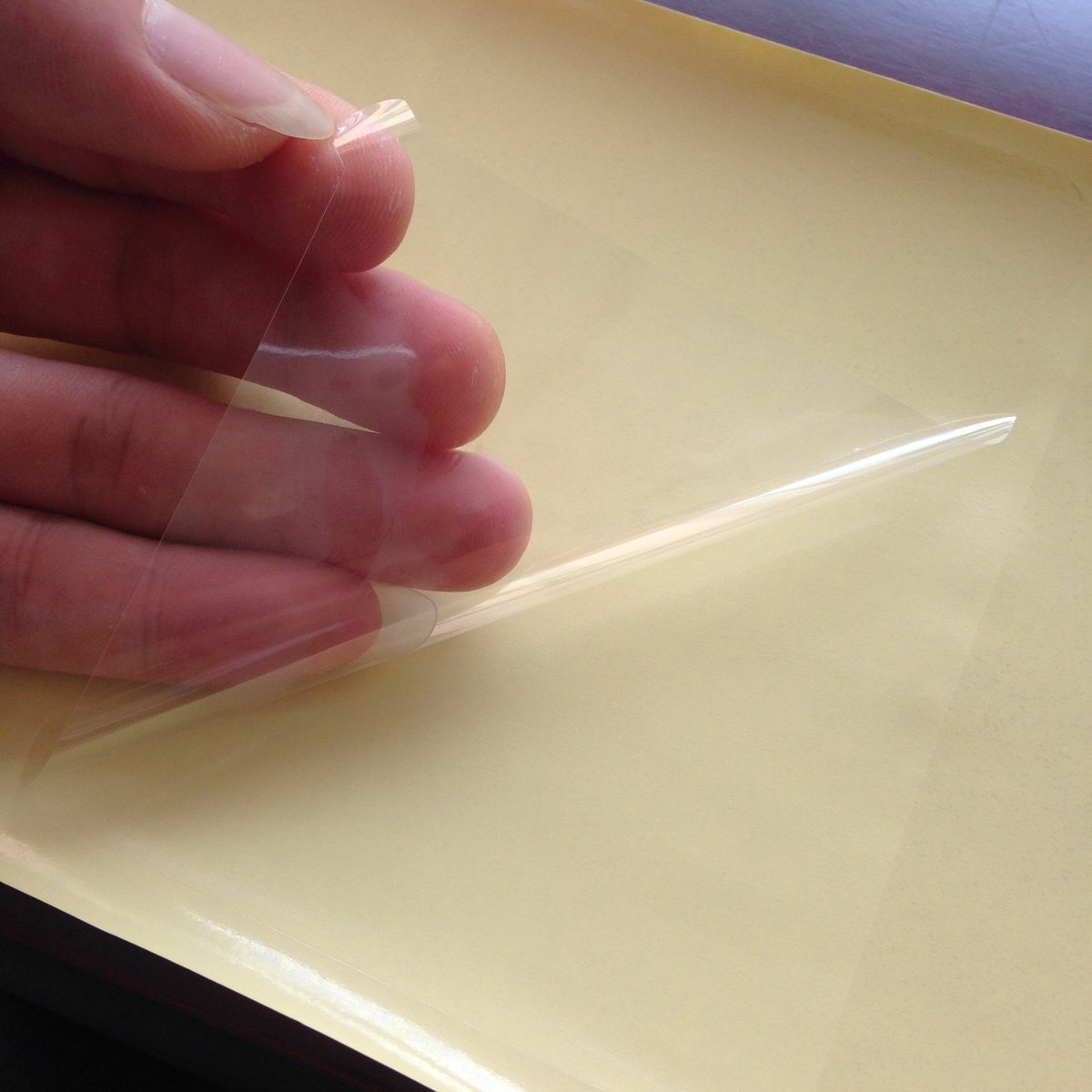
**Failure mode 1 — adhesive transfer.** The adhesive layer separates from the film backing and stays on the surface. Typical causes: the adhesive is too aggressive for the surface energy, dwell time exceeded the design window, or heat aged the adhesive into the substrate. It looks like a tacky film or fingerprints that attract dust.
**Failure mode 2 — cohesive failure.** The adhesive splits internally: some stays on the panel, some stays on the film. This usually means the adhesive's internal strength is lower than its bond to the surface — common after high-temperature exposure or when a film rated for 60 °C sees 90 °C.
**Failure mode 3 — surface interaction.** Some substrates — certain powder coatings, soft plastics, fresh paint — chemically interact with rubber-based adhesives, producing a hazy 'ghosting' that is not removable adhesive but a change in surface gloss. This one is often mistaken for residue. It requires a different adhesive system, not a stronger solvent.
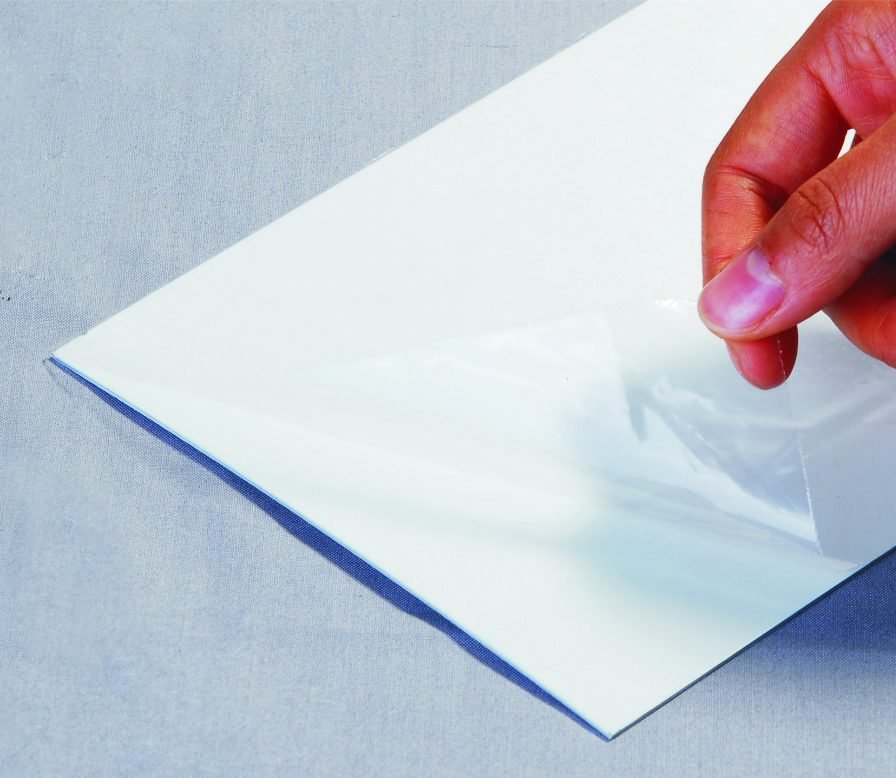
**Immediate steps on site.** Stop peeling the rest of the batch — you may be able to save it by changing technique: peel slowly at a low angle, close to the surface, and use gentle heat (a hot-air gun around 50–60 °C) to soften the adhesive. Fast, high-angle pulls are what turn manageable residue into a mess.
**Cleaning methods, mildest first.** Start with warm water and mild detergent for water-based residues. Move to isopropyl alcohol (IPA) for most acrylic residues. Use citrus-based or aliphatic solvent cleaners for stubborn cases. Strong aromatic solvents (toluene, xylene) should be a last resort — they can damage paints and plastics, and carry serious workplace health requirements.
**Always test first.** Try any cleaner on an inconspicuous area of the same part before going across the whole surface. Solvents can dull glossy coatings, craze polycarbonate and lift screen printing — damage that is far worse than the residue you were removing.
**Preventing recurrence.** Four changes solve most cases: move to a lower tack grade; shorten the stated dwell time and enforce removal dates; specify a high-temperature-resistant adhesive system if parts see heat; and ask for a different adhesive chemistry (acrylic vs rubber) if you suspect surface interaction.
**What we can do.** Send us a photo of the residue, the model code you used, the substrate, dwell time and temperature history. Our team will identify the failure mode and recommend an adjacent grade for your trial — free samples are available for validation on your own parts.