How to Compare Protective Film Quotes Without Getting Fooled
Quotes for the same 50 micron blue PE film can differ by a third. Five parameters decide whether that gap is a discount or a different film.

Request quotes from three suppliers for a 50 micron blue PE protective film to cover aluminium profiles during fabrication and installation. All three quotes describe the same product: blue PE, acrylic adhesive, self-adhesive. One of them lands well below the other two, and the temptation is to sign with the cheapest. In practice that gap is almost never a discount — it is a different film hiding behind identical wording. A protective film quote is only comparable when five parameters are stated in writing, and the price should be read last.
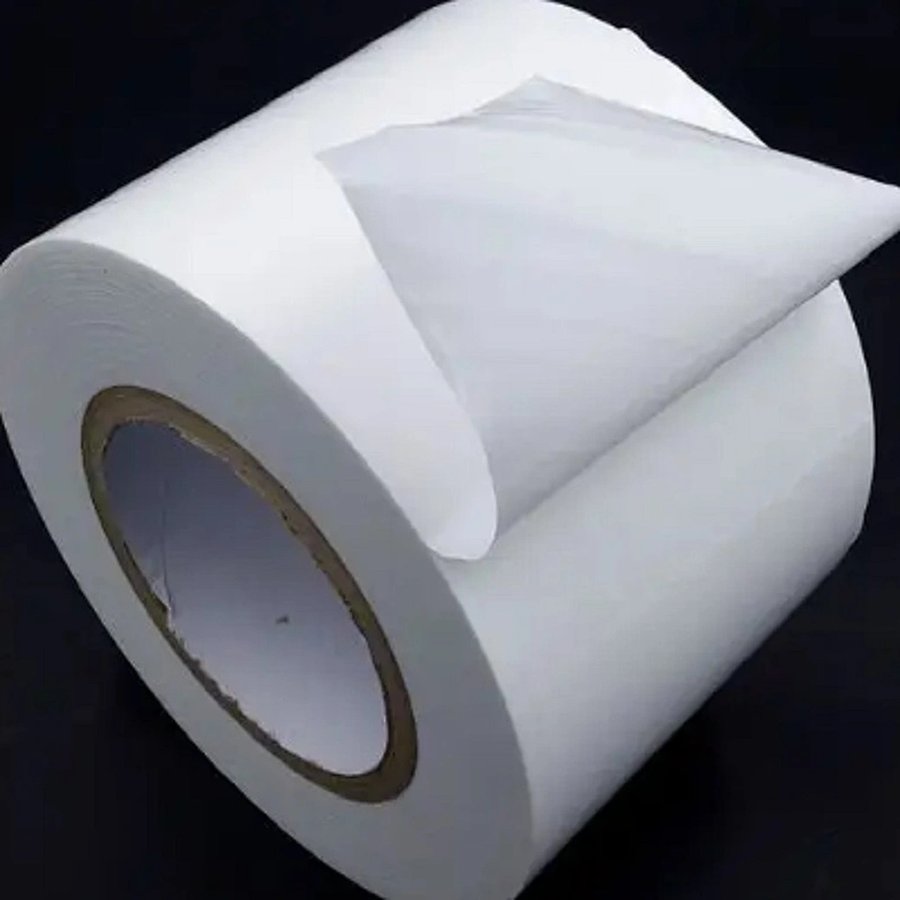
Start with peel strength. A serious quote names an exact value and the test method behind it — for example a value in the 30–300 g/25mm range measured to GB/T 2792 or ASTM D3330, the 180-degree peel test run at 300 mm/min. Our PE construction materials film GDY-033 is specified across that entire 30–300 g/25mm range, which is precisely why a quote that only says medium tack cannot be compared with anything. Ask which end of the range the quoted film sits at, and under what conditions it was measured.
Second, thickness tolerance. A film quoted at 0.05 mm nominal can legitimately ship at 0.045 mm if the tolerance band runs to minus 10 percent, which is a common specification. Across the 0.02–0.20 mm range that construction-grade PE films like GDY-033 cover, ten percent of thickness is real money: thinner film uses less resin, but it also gives up puncture resistance during handling and transport. Always ask for the tolerance band, not just the nominal number, and reject any quote where thickness tolerance is not stated.
Third, width and roll length, because quotes priced per roll are not comparable. GDY-033 is supplied in widths from 150 to 2100 mm and roll lengths from 200 to 1000 m. A roll quoted cheap can hold fewer usable metres once the core and edge trim are subtracted. Convert every quote to usable square metres — width in metres multiplied by actual length in metres — and compare on that number alone. Two rolls with the same sticker price can differ by close to ten percent in usable area.
Fourth, ask how adhesion is expressed over time. Peel strength measured twenty minutes after lamination is not the same behaviour you will see after twenty-four hours, seven days or six months of warehouse storage. Adhesion grows as the adhesive flows into surface texture, and on panels stored for months that growth is the difference between a clean peel and residue. If your panels sit longer than a month before processing, ask the supplier for an adhesion-versus-time curve, not a single static value.
Fifth, the costs that sit outside the quote: minimum order quantity, packaging, freight terms and lead time. FOB and CIF prices cannot be compared directly, so normalise them first. Packaging matters more than buyers expect — core and pallet choices change how a film survives sea freight. And a lead-time gap of fifteen days versus forty-five days has its own price in stockouts and rush freight, even when the unit price looks identical.
Once the five parameters are on paper, rebuild the comparison in cost per square metre: roll price divided by width in metres times length in metres. For a 1.22 m wide, 500 m long roll, the usable area is about 610 square metres. Run every quote through that formula and you will usually find the lowest sticker price is no longer the cheapest film. Do this before sampling, because it tells you which one or two candidates deserve a line test at all.
Then make the parameters contractual. A quote worth accepting lists the peel value with its test standard, the thickness tolerance band, actual width and roll length, the adhesive system, and shelf life. If a supplier hesitates to put any of these in writing, you have already learned something. For most metal and construction panel work, the GDY-033 specification page shows what a fully specified film looks like — use it as a checklist when you mark up a quote.
The last step is physical, not clerical. Request samples, run them on your own line for seven days under your real conditions, and peel-test at the intervals your panels actually experience. You can start with free samples slit to your width. Send each remaining supplier your panel material, storage duration and lamination method, and ask them to state which grade in their range they would commit to. Then negotiate the price against a film you have measured, not one you have read about.