China to Vietnam: Land vs Sea Transit, Landed Cost and Film Choice
Trucking into northern Vietnam runs about 2-4 days door to door; sea freight takes 10-18. How transit time, container heat and cross-dock handling should change the film you order.
Two orders, same film, same week. One leaves a Guangdong plant on a truck through the Friendship Pass border crossing and reaches a fabricator near Hanoi in three days. The other sails south toward Ho Chi Minh City and lands eighteen days later. Three months on, the trucked panels peel clean, while the shipped ones show adhesive drift at the edges. Nothing was wrong with the film itself — the two lanes simply stressed it in completely different ways.
Start with the transit numbers, and treat them as typical ranges quoted by China-Vietnam line-haul forwarders rather than promises. Land trucking from Guangdong through border crossings such as Friendship Pass or Dongxing typically runs 2 to 4 days door to door into northern Vietnam — Hanoi, Hai Phong, Bac Ninh — about 4 to 6 days into the central provinces, and roughly 4 to 8 days into Ho Chi Minh City, Binh Duong and Dong Nai. Sea freight from southern Chinese ports is a port-to-port voyage of about 8 to 13 days, which becomes 10 to 18 days door to door for LCL once clearance and delivery are added.
The variable that decides film performance is not distance. It is dwell time: how long the roll sits in contact with the panel, at temperature, under compression, before someone peels it. A trucked load reaches the customer with 3 to 8 days of contact history. A sea shipment carries 2 to 4 weeks of it, often in a container that sat on a sun-exposed deck for part of the voyage. Time and heat both push peel strength upward, so a grade that peels cleanly after a week on a truck can drift toward the top of its window after three weeks in a box.
Heat inside a closed container is the second factor, and it compounds with dwell. Closed containers on tropical routes commonly see interior temperatures above 40 degrees Celsius during the day. The industry screening cycle for exactly this combination of heat and moisture is damp-heat conditioning at 40 degrees Celsius and 90 percent relative humidity for 72 hours, after which the film is peeled and inspected for residue. A film that passes that cycle on your substrate has margin for the sea lane; one tested only at room temperature does not tell you anything about it.
Landed cost follows a different logic, because film is bulky relative to its weight. A roll of protective film can be 150 to 2100 mm wide and 200 to 1000 m long at only 0.02 to 0.20 mm thick, so one pallet fills a lot of volume while weighing very little. Land line-haul is typically quoted per kilogram or per cubic metre, sea LCL per cubic metre, and full-container per box. For light, bulky cargo such as film, a per-kilogram land quote often beats an LCL sea quote, while a full container of densely packed pallets is usually cheaper by sea than by truck into the south.
The two lanes also damage cargo differently, and the failure fingerprints are distinct. Land freight involves several cross-dock touches — pickup, the forwarder warehouse, the border warehouse, a Vietnamese warehouse, final delivery — so the typical damage is mechanical: crushed edges, telescoped rolls, film scored before it ever touches a product. Sea freight involves few touches but long static compression in heat, so the typical damage is adhesive: peel drift, edge lift and residue where the film was tightest against the surface.
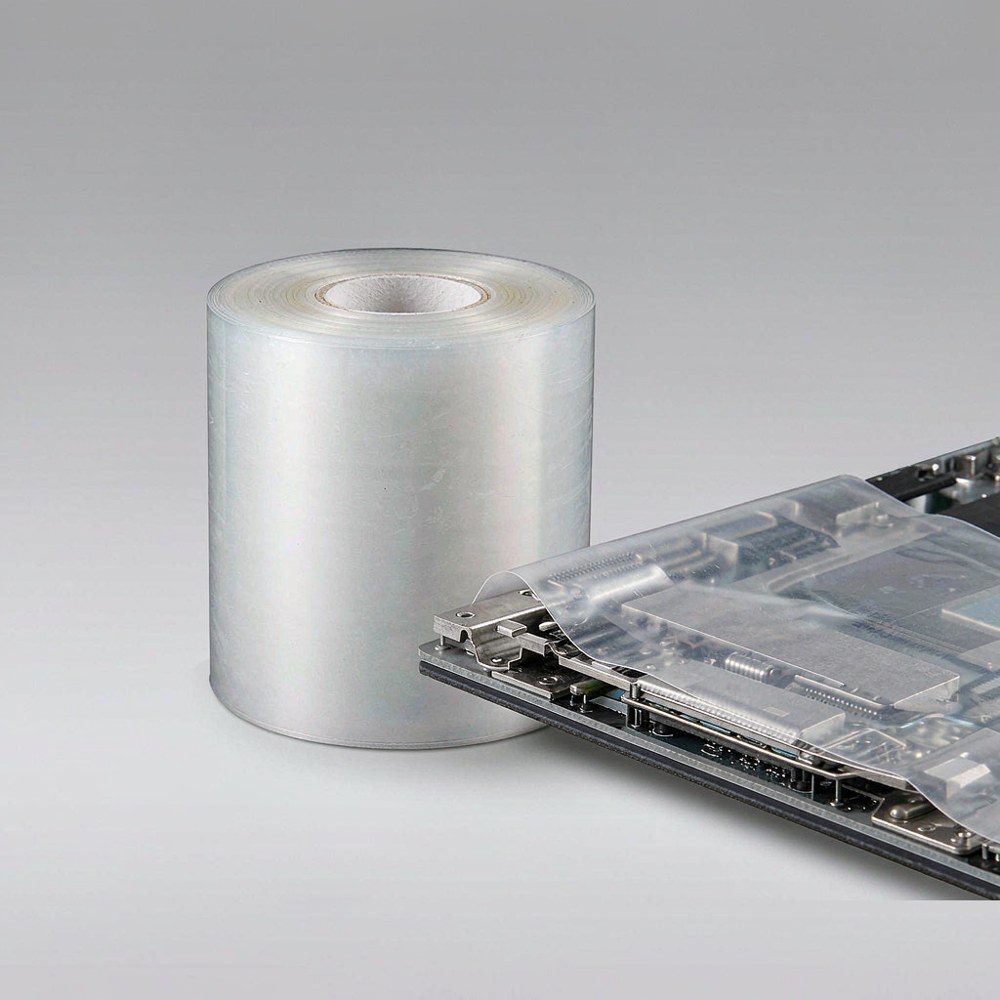
This is why the right specification depends on the lane. For long sea dwell, pick a grade whose peel strength sits in the lower half of its window, or a co-extruded film that carries no adhesive at all — our PE three-layer co-extruded film runs 30 to 300 g/25mm peel, 0.02 to 0.20 mm thick, 150 to 2100 mm wide, and peels clean because the tack is built into the layers rather than coated on. Full parameters are on the product page. For land freight with heavy rehandling, a tougher carrier matters more than tack.
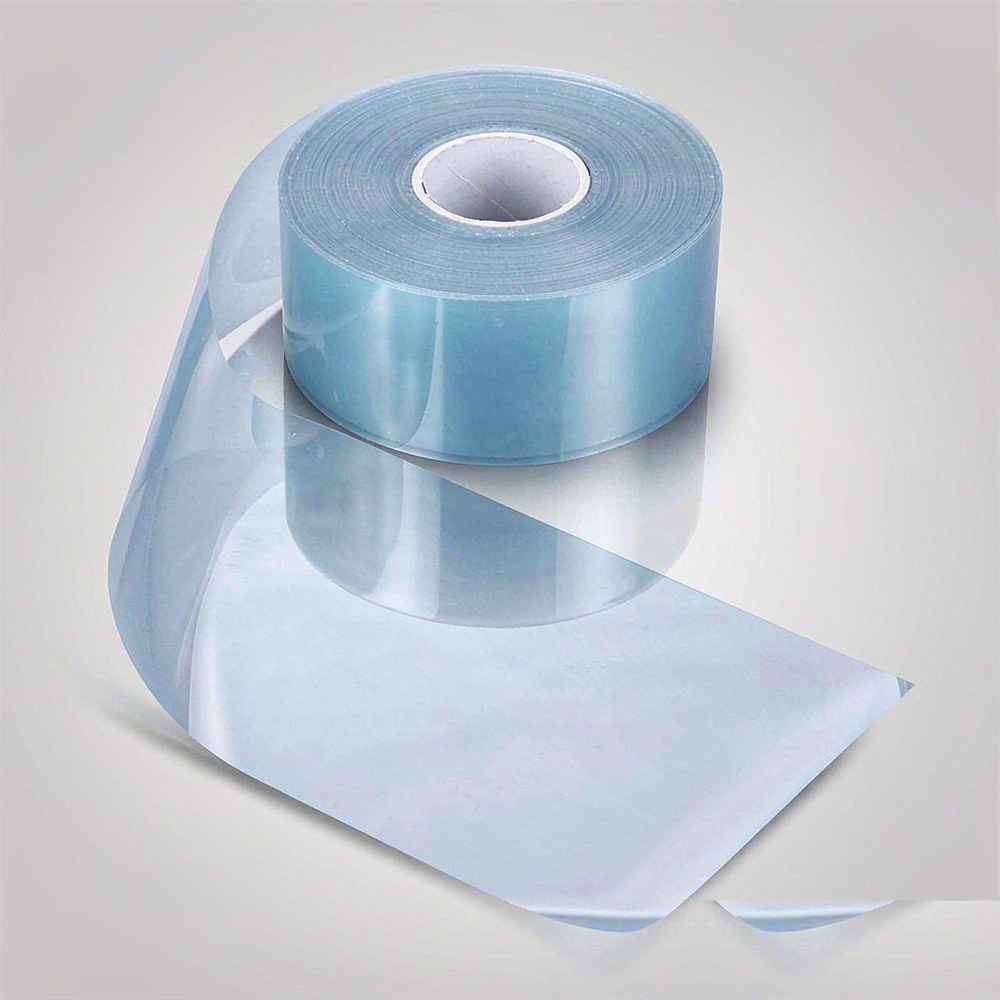
Whatever the lane, blue PE film remains the standard reference for metal panels shipped into Vietnam, because the colour makes edge lift, water staining and scoring obvious at incoming inspection — problems get caught at the dock instead of at the press. The blue PE grade is documented here. On packing: stretch-wrap every pallet so rolls cannot breathe and shift, keep roll ends supported rather than overhanging, and leave original wrapping on until the moment of use, since unwrapped rolls are where both condensation and dust start.
Before committing a lane, test it the way it will actually run. Order free samples, apply them to your own panels, and split the test: keep one set in a dry room, and put the other through the worst leg — either a real shipment or the 40 degrees Celsius, 90 percent RH, 72-hour cycle — then peel both to GB/T 2792 and compare. The difference between the two numbers is what the lane costs you in film, and it is the only honest input for choosing between a lower-tack grade, a co-extruded one, or a different adhesive system altogether.
The decision rule is simple enough to pin above a desk. Northern Vietnam, small or urgent lots: go by land, and spend attention on packing against rehandling. Southern Vietnam, full pallets, regular replenishment: go by sea, and spend attention on dwell — lower peel, cleaner adhesive, longer protection window. In both cases, tell your film supplier the exact lane, the expected dwell in days and the shipping month; a film chosen with the lane in mind costs the same as one chosen blind, and performs nothing like it.