Local Vietnamese Film vs Chinese Import: Where Each Actually Wins
A lower price per kilogram is not a lower cost per square metre. Where local Vietnamese film wins, where factory-direct wins, and the damp-heat peel test that settles it.
A purchasing manager in Binh Duong puts two quotes side by side for the film that protects his aluminium profiles: one from a Vietnamese converter who can deliver tomorrow, one FOB from a Chinese factory at a lower price per kilogram. He is about to make the most common mistake in this market — comparing the two on price alone, as if they were the same product arriving by different routes. They are not. Local converting stock and factory-direct import film answer different problems, and each wins in a different part of your operation.
Start with the arithmetic that per-kilogram comparison hides. PE film is sold by weight because it is made by weight: polyethylene has a density of roughly 0.92 g/cm³, so every 0.01 mm of thickness adds about 9.2 grams per square metre. A 0.05 mm film therefore weighs around 46 g/m² and a 0.10 mm film around 92 g/m² — double the material for the same visible area. If the local quote is based on a heavier construction, its cheaper per-kilo number can actually cost you more per square metre. Convert everything to price per square metre at a stated thickness before comparing anything else.
Where local stock genuinely wins: speed and small quantities. A converter holding jumbo or slit rolls in a local warehouse can deliver within a day or two, in lots as small as a single pallet, with no customs paperwork and no container minimum. For emergency top-ups, trial runs and short orders that change width every fortnight, that responsiveness has real value — a line stoppage waiting on a ship costs far more than the price difference between the two quotes.
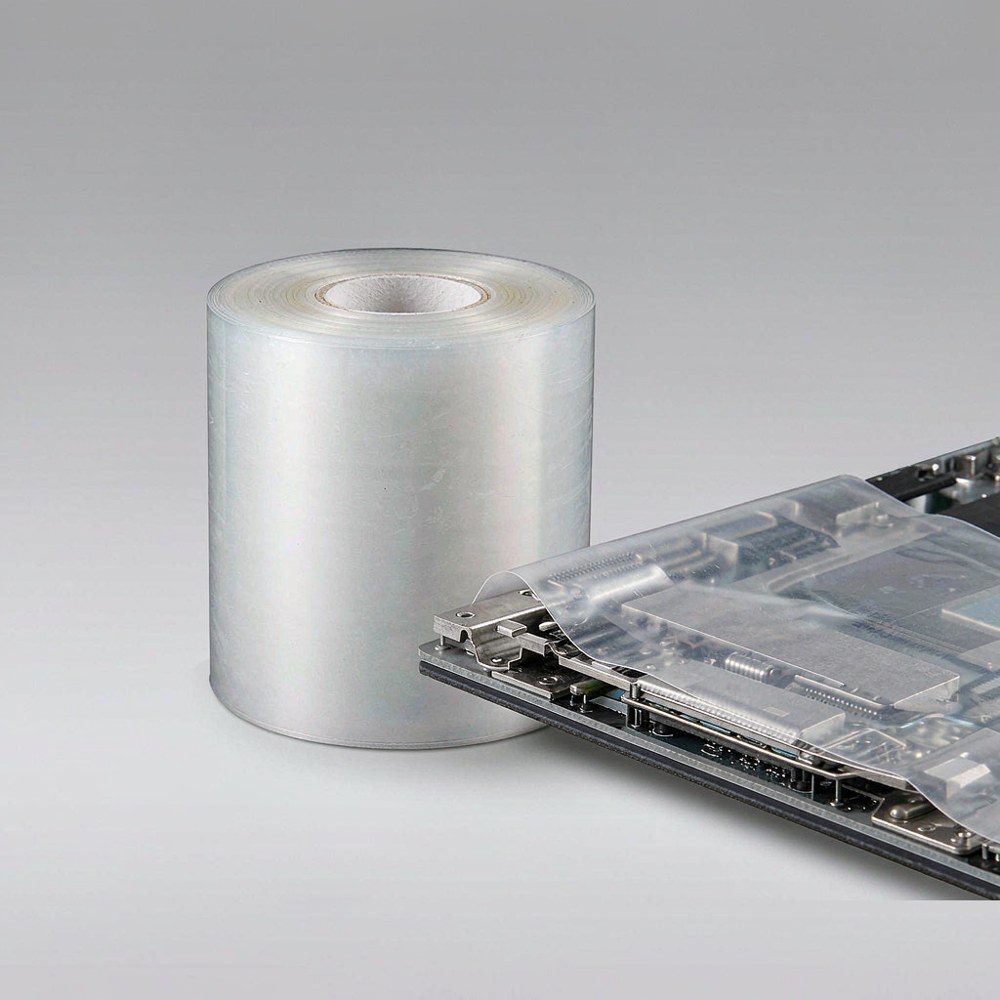
Where factory-direct wins: range and adjustment. Most Vietnamese converters do not coat their own film; they buy jumbo rolls and slit them, so the specification range they can sell is whatever the mother roll happened to be. A coating factory can vary the parameters that matter: peel strength engineered anywhere in the 30–300 g/25mm band measured to GB/T 2792, thickness anywhere from 0.02 to 0.20 mm, and widths from 150 up to 2100 mm — the figures on a construction-grade PE film, but the principle generalises. The more awkward your substrate or process, the more the adjustable range is the answer.
There is also a traceability difference. Film that passes through a converter carries two production events — the coating batch and the slitting lot — and the buyer usually sees only the second. When adhesion drifts on the third order, a direct factory can trace the coating batch, the adhesive formulation and the curing record in one system; a middleman can only ask his own supplier, and the trail goes cold there. The second-order quality drop that buyers complain about is usually a chain problem, not a factory problem.
Then the items quotes leave out: ocean freight plus customs clearance makes the import route a matter of weeks rather than days, capital sits in stock sized to the MOQ, and resolving a claim across a border costs time. A defective local roll is swapped this week; a defective imported roll opens a negotiation measured in shipping cycles. An importer should price that delay, not just the ocean freight.
A workable decision rule: if monthly consumption does not fill a container, or your widths change often, buy local stock and pay for flexibility. If consumption is large and steady, and the substrate is particular — mirror stainless, powder-coated panels, oiled galvanizing — buy factory-direct and have the adhesive matched, because generic middleman stock is exactly where residue and edge-lift complaints come from. Many Vietnamese plants end up doing both: one stable direct-import specification for the main line, local stock as a buffer.
Whichever route you pick, decide it with data from your own line, not the datasheet. Run the baseline 180-degree peel to GB/T 2792 at 23 degrees Celsius and 50 percent relative humidity, then the industry damp-heat cycle of 40 degrees and 90 percent RH for 72 hours, then peel on your actual substrate and inspect for residue. In a climate like Vietnam's, two films that look identical at 23 degrees routinely separate into winner and loser after the damp-heat cycle. Test both candidates on the same day, with the same operator and the same panels.
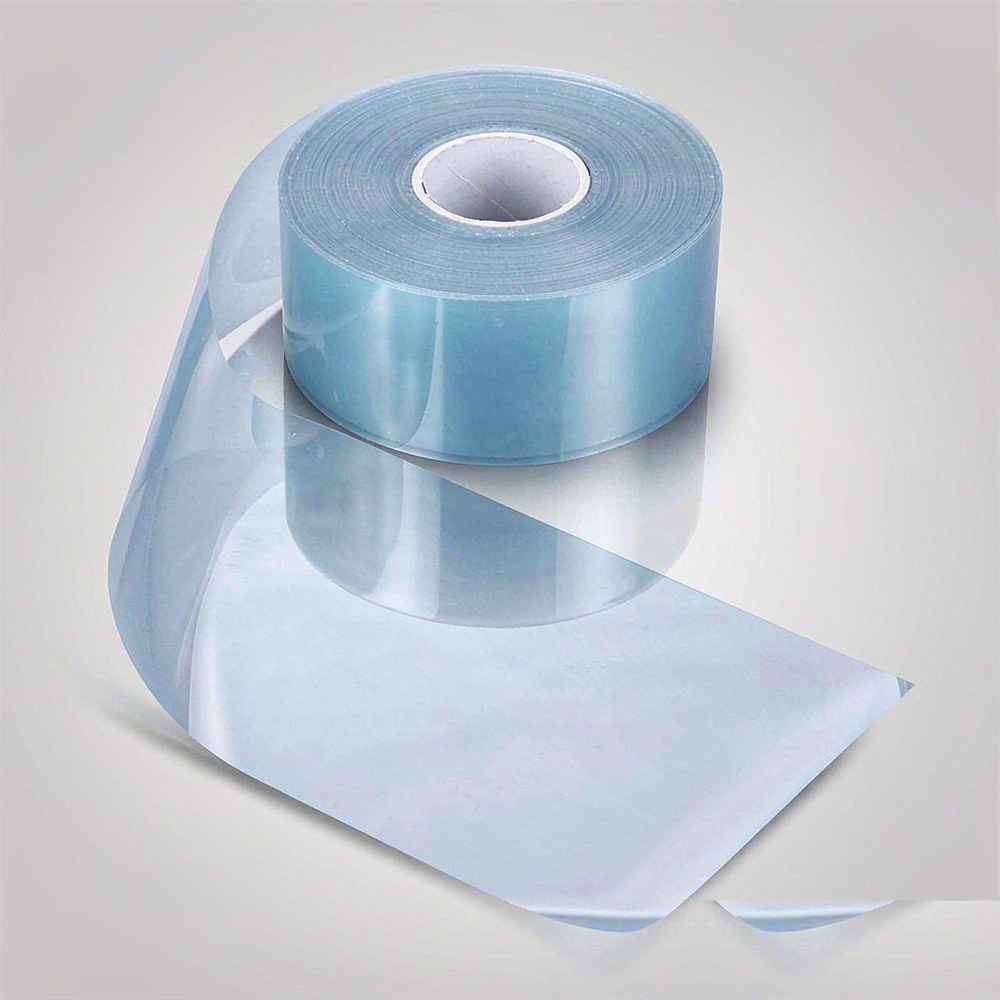
This is the logic behind our export line for Southeast Asia. The blue self-adhesive PE film is the general-purpose reference for stainless, plastic sheets and building-material surfaces — the bright colour makes edge lift and missed coverage obvious at incoming inspection. For profiles and panels that need engineered adhesion, the construction-grade film is specified at 0.02–0.20 mm thickness, 30–300 g/25mm peel and 150–2100 mm width, adjusted to the substrate rather than sold as a fixed grade. Samples of both are cut to your specification.
Do this in your next quotation cycle: send two panels of the substrat that gives you the most trouble, with your storage conditions — humidity, dwell time, transit route. We cut both films at two tack levels and ship them; you run the two-stage peel comparison above and keep whichever peels cleanly after the 40°C/90%RH leg. One week of testing settles the local-versus-import question with numbers from your line instead of opinions from either salesman.