Protective Film Glossary: 30 Terms SEA Buyers Should Know
Tack, peel strength, haze, MD and TD: thirty terms decide whether a protective film order lands right. A plain-language glossary for buyers across Southeast Asia.

A purchase order lands in your inbox from a plant in Ho Chi Minh City: 'blue PE film, medium tack, 50 micron, low residue, 1.22 m wide.' Every word in that line is a term with a definition, and every loose reading of those definitions becomes a claim, a rejected roll or a delayed shipment later. In Southeast Asian film trade, where specifications cross languages before they reach a coating line, a shared vocabulary is not an academic exercise — it is the cheapest quality control a buyer owns.
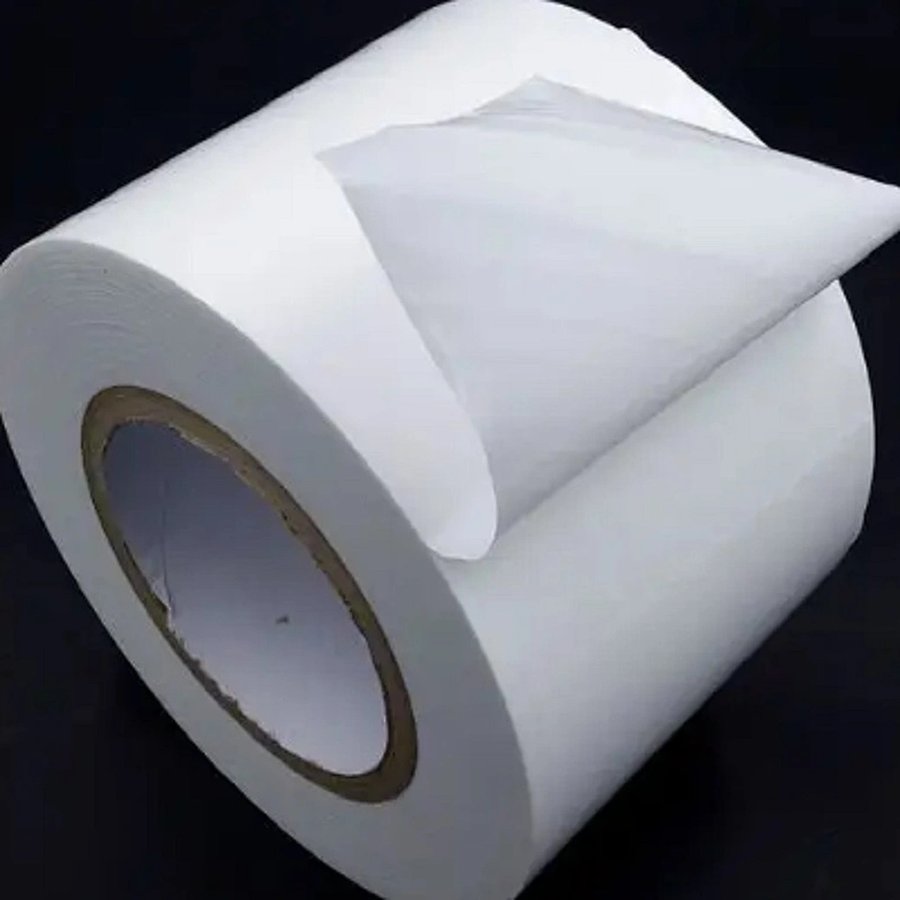
Peel strength is the force needed to pull film off a surface at a defined angle and speed, tested under GB/T 2792 or ASTM D3330 at 180 degrees and reported in g/25mm or N/25mm. Typical PE protective films span 30–300 g/25mm; our GDY-033 construction film is specified across exactly that range. Tack is a related but separate term: it describes the initial grab the moment film meets the surface, before time and pressure have done their work.
Adhesion build-up explains why the two words must not be mixed. A pressure-sensitive adhesive keeps flowing into surface micro-cavities after lamination, so the force needed to remove film today is not the force you will need in three months. A film specified around 60 g/25mm can read well above 100 g/25mm after months on a hot warehouse rack. Buyers who never wrote a maximum peel value into the order are usually the ones who meet residue for the first time.
That failure has its own vocabulary. Residue is adhesive left on the surface after peeling; ghosting is a faint shadow with no measurable adhesive, often caused by an additive migrating between film and surface. Both are dismissed by suppliers as storage problems and by buyers as quality problems, and the argument lasts weeks because neither side wrote numbers into the contract.
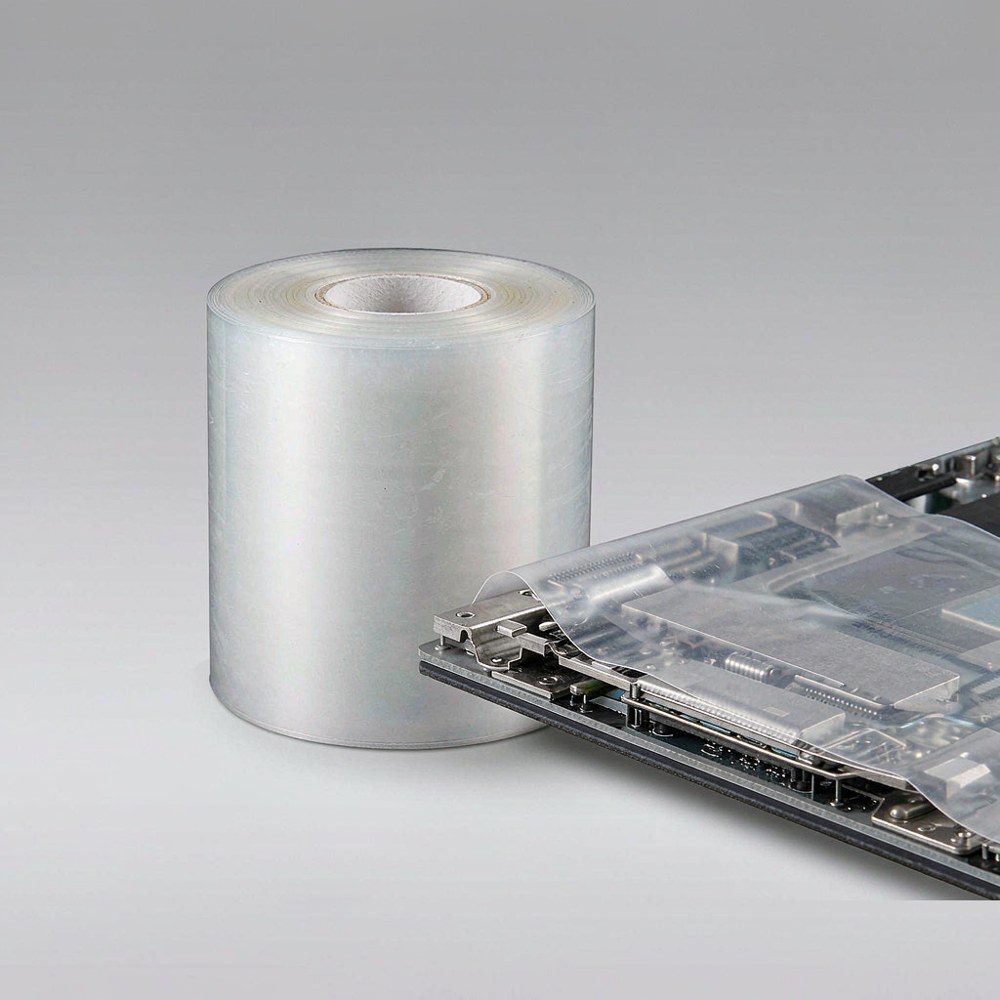
Haze and light transmittance govern inspection. Haze is the percentage of light scattered while passing through the film; transmittance is the percentage that passes at all. A hazy film hides scratches from the inspector standing over the line, and a low-transmittance film darkens the surface until print and colour checks turn unreliable. Two films can both be called clear and still differ meaningfully in these two numbers.
Thickness vocabulary starts with the micron: 50 micron is 0.05 mm. Nominal thickness is what the datasheet states; thickness tolerance is what the line actually guarantees, typically ±10%. A nominal 0.05 mm film at ±10% can run from 0.045 to 0.055 mm — enough spread to change both cost per square meter and stiffness on the laminating roller. Films in this class range from 0.02 to 0.20 mm, so the nominal number alone tells you very little.
Geometry terms follow. Width is the slit dimension of the roll — GDY-033, for example, is supplied from 150 to 2100 mm — and roll length runs from 200 to 1000 m depending on thickness. The core is the tube at the center of the roll, paper or plastic, sized to fit your dispenser; OD means outside diameter. MD is the machine direction and TD the transverse direction: film tears and stretches very differently along these two axes, which is exactly what matters when a panel is bent or deep-drawn.
Material and adhesive terms separate the catalogue. PE films are soft, conformable and economical; PET films are stiff, dimensionally stable and very clear; PVC films stretch further but age differently outdoors. All are pressure-sensitive adhesive products, and the adhesive family matters more than the colour: acrylic systems dominate general metal protection for their balance of clarity and weathering, while silicone systems appear where higher temperature or special release behaviour is required.
Commercial terms move as much money as technical ones. MOQ is the minimum order quantity a coating line can produce economically; lead time runs from order confirmation to shipment; landed cost adds freight, duty and clearance on top of the unit price. Shelf life is the storage window — typically 6 to 12 months at around 23°C, dry and out of direct sunlight, as stated on supplier datasheets — within which the specified adhesion still holds.
Two test names close the list. ISO 9227 is the neutral salt spray test used to judge corrosion protection during coastal storage and sea freight. When you write the next RFQ, attach numbers to the words: peel range, thickness and tolerance, width, roll length, expected storage duration. Review the full GDY-033 specification to see how these terms look in a real datasheet, then request free samples and test the vocabulary against your own line before the first production order.