6 Months in Storage: How Protective Film Adhesion Grows on Steel
A film that peels clean after one week can fight back after six months. How adhesion grows during long storage, and a removal-window plan for delayed projects.
A fabricator laminates 200 stainless steel elevator panels in January, expecting to ship in March. The project slips to September. When workers finally peel the film, it no longer comes off in one clean pull: it stretches, tears in strips, and leaves adhesive along the polished edges. Nothing wrong happened to the steel. The film simply spent six months bonding itself deeper into the surface, week after week.
Pressure-sensitive adhesives keep flowing after lamination. In the first hours the adhesive only touches the peaks of a brushed or polished finish; over days and weeks it creeps into the valleys of the micro-texture, increasing the real contact area. This wetting process is fastest at the start and then slows down, which is why the peel force climbs steeply in the first month and keeps rising more gently afterwards. The film is not deteriorating. It is doing its job too well.
Datasheet numbers describe day one, not month six. Standard peel tests under GB/T 2792 and ASTM D3330 are performed at a 180 degree angle at a speed of 300 mm/min, after 24 hours of dwell at 23 °C ± 2 °C, with ASTM D3330 also specifying 50 % ± 5 % relative humidity. A typical medium-tack PE film measures about 100 to 200 g/in under those conditions. Every additional month of indoor storage at 23 to 30 °C pushes the measured value upward, commonly reaching several times the datasheet figure after six months; the exact multiple depends on the adhesive system and the surface finish, so it must be verified on the actual film.
The growth curve explains why the removal experience changes in stages. Within the first two to four weeks, the film usually peels much as it did in the lab. Around one to three months, removal needs noticeably more force and the film begins to stretch. Past three months, on bright annealed or mirror finishes, the peel often turns jelly-like, and beyond six months the risk of adhesive residue rises sharply, especially if the storage area gets warm in the afternoon.
Heat accelerates the same process. A warehouse that stays at 23 °C is the reference case; one that reaches 35 to 40 °C in the afternoon compresses months of adhesion growth into weeks. Outdoor storage is worse, because sun-facing sheet surfaces can exceed 50 °C and UV exposure can embrittle the film backing itself, making it crack instead of peel. Storage position matters as much as duration: stacked sheets pressed face to face add load on top of time.
This is why tack grade must be chosen against the realistic storage duration, not the shipping schedule. For panels processed within 30 days, a medium-tack film around 100 to 200 g/in is a sound choice. For storage of one to three months, a low-tack grade in the 30 to 80 g/in range keeps the removal window open. For delays beyond three months, or any outdoor exposure, use the lowest tack that still holds the film in place during handling and transport, on an opaque backing if the sheets will see daylight.
Four disciplines keep long-storage projects removable. First, write the lamination date on the film edge or the protection order, so the storage age of every stack is visible without unwrapping it. Second, run a peel check on one sacrificial panel at 30, 90 and 180 days; ten minutes of testing replaces a week of scraping. Third, store sheets vertically or spaced, away from sun-facing walls, below 40 °C and out of rain. Fourth, never let film age past its removal window on surfaces that will be inspected after peeling.
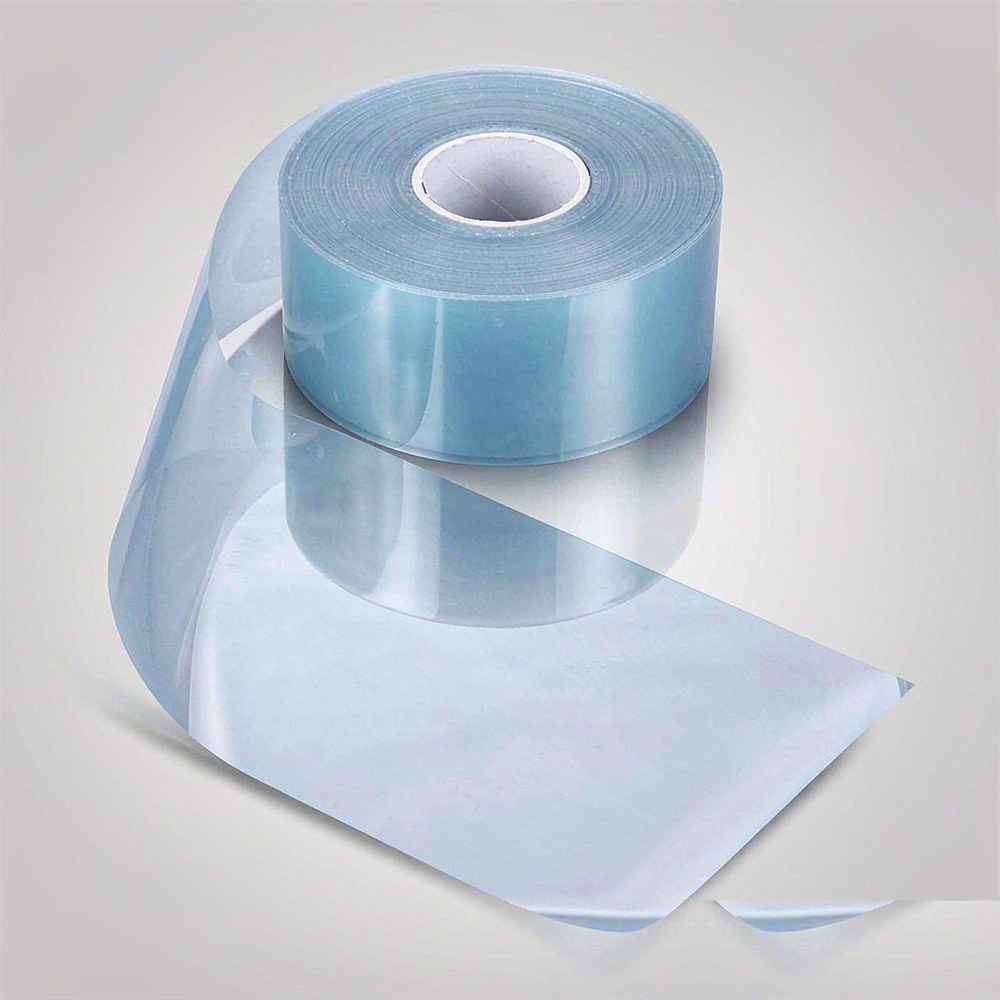
Tack can also be specified up front. A factory that runs its own coating lines adjusts formulation to the customer's real timeline instead of shipping one universal grade. Our PE blue protective film GDY-031 is coated in-house, so if you know a shipment may sit for a quarter or two, we can supply a low-tack blue film that still gives the bright, easy-to-spot coverage the line needs for visual inspection.
The cheapest way to de-risk a delayed project is a storage test before the delay happens. Request a free sample, laminate four panels with your production film, keep two at room temperature and two in the warmest part of the warehouse, and peel one pair after four weeks and the other after twelve. Send us the panel dimensions, surface finish and realistic worst-case storage duration, and we will specify the tack grade and the removal window to write into your work instructions.