PE vs PET Film for Metal Surface Protection: An 8-Point Comparison
Thickness is not the real difference between PE and PET film. Eight points - stiffness, adhesion, heat limit, residue and cost - decide what your metal line needs.
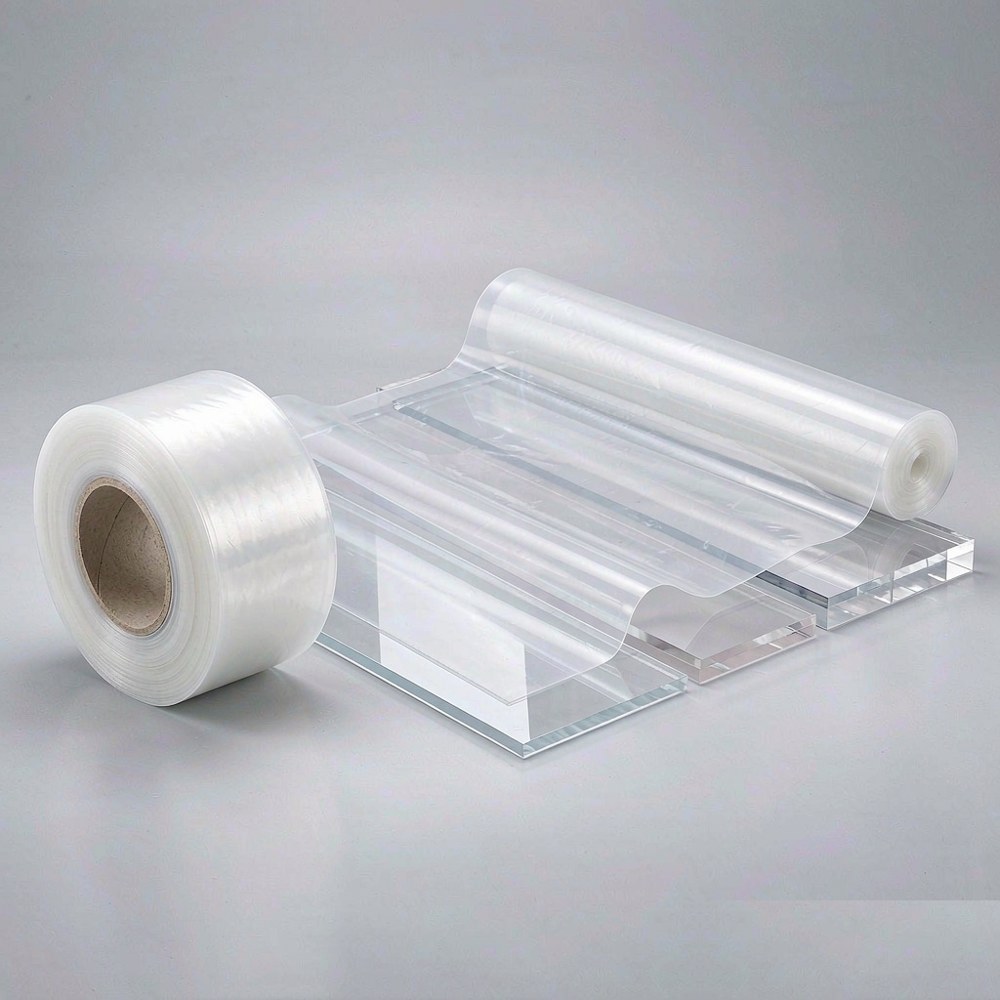
A fabricator asks three suppliers for film to protect 1.2 mm brushed stainless sheets during bending and transport, and receives two quotes with identical thickness. One film is PE, one is PET, and the PET quote is noticeably higher. The instinctive conclusion is that PET is simply overpriced. The real difference is not thickness at all - it is the polymer substrate, which decides how the film behaves on your specific process. Below are the eight points that actually separate the two, with the numbers that should appear in any quote.
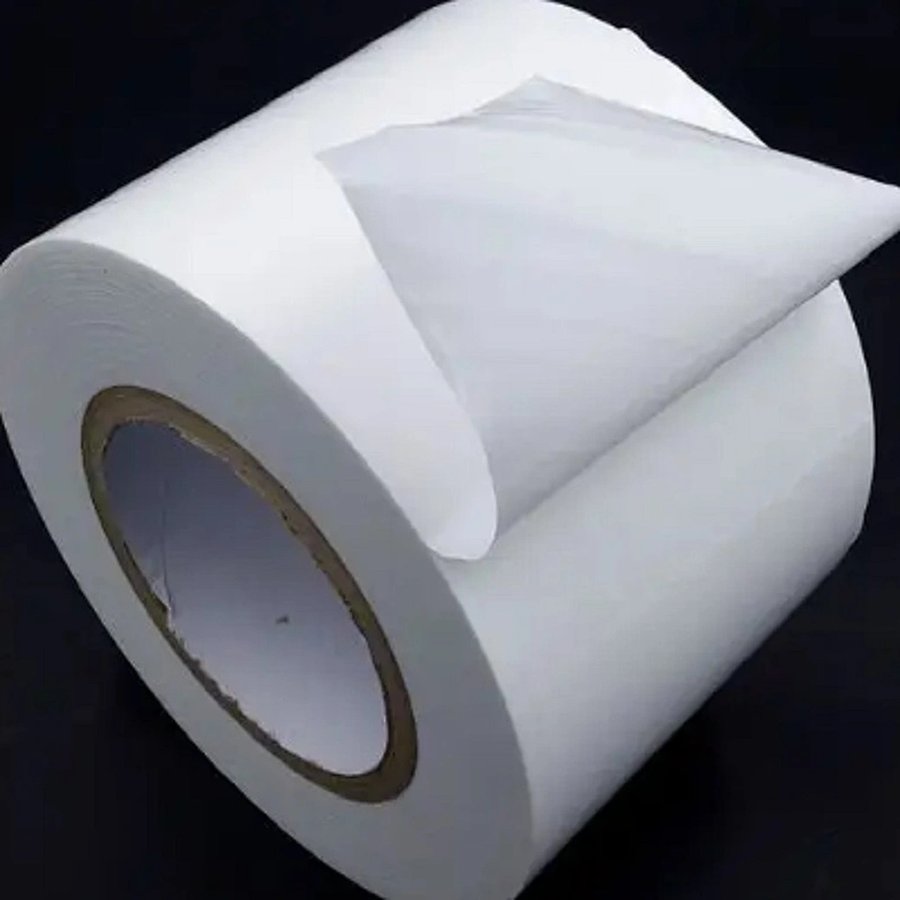
Point one is stiffness. PE film is soft and stretches; PET is a polyester film with far higher tensile strength and dimensional stability. On a flat panel the difference is invisible. On a part that gets rolled, bent or wrapped around a corner, it decides everything: PE stretches and follows the curve, while a stiff PET film tends to lift at edges or crease at tight radii. For panels that pass through a CNC bender, PE panel film GDY-072 is the substrate that survives the forming step.
Point two is thickness. PE protective film runs from 0.02 to 0.20 mm in the GDY-072 range, covering light transit protection up to heavy sandblasting and profile work. PET is thinner by nature: the silicone PET grade spans 50-188 µm and the acrylic PET grade 50-115 µm. If a quote asks for film above roughly 0.15 mm, PET stops being realistic and PE is the answer; if it asks for under 40 µm with precise die-cutting, PET wins.
Point three is the adhesive. PE carries acrylic pressure-sensitive adhesive specified as peel strength between 30 and 300 g/25 mm, adjustable to the surface. PET uses different chemistry: silicone adhesive measures 1-32 g tack for optical surfaces, while acrylic PET reaches 1-2000 g for demanding process films. Compare quotes only on values measured to the same method - GB/T 2792 or ASTM D3330, the 180-degree peel test at 300 mm/min - and ask which end of the range your surface sits at.
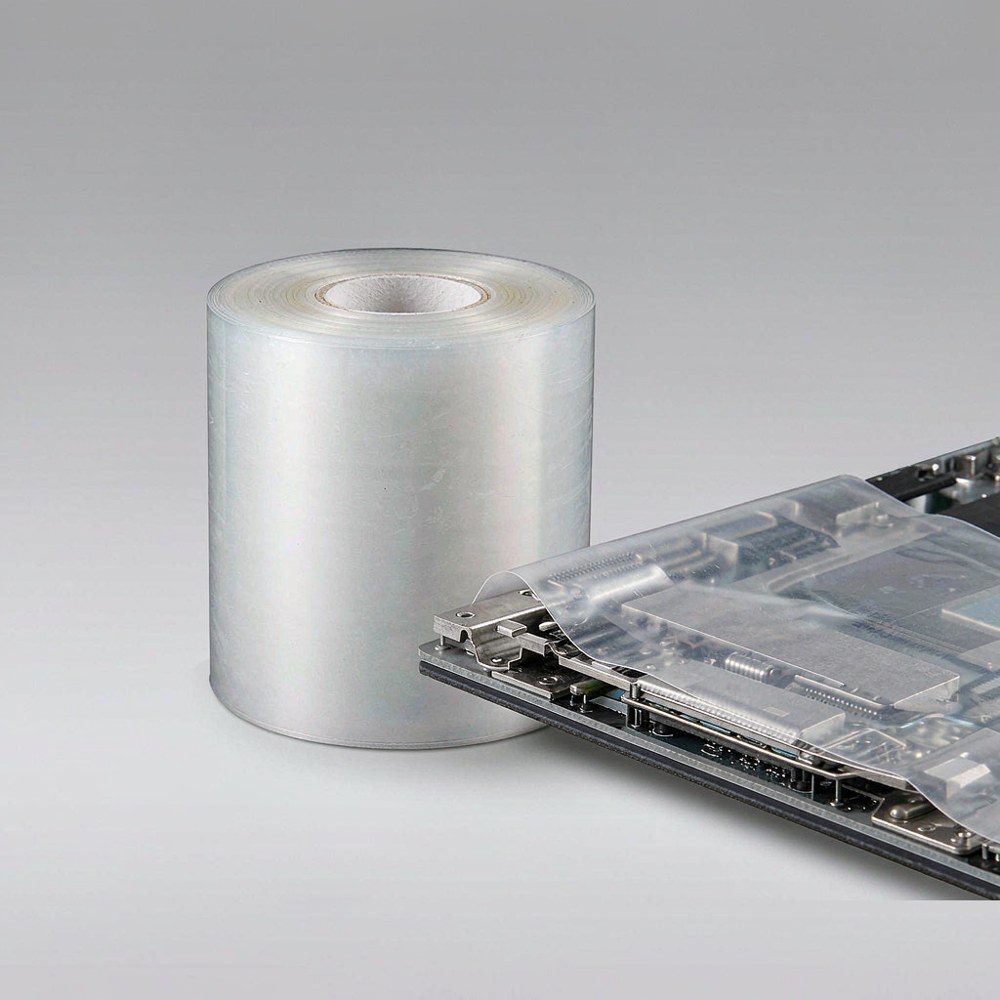
Point four is temperature. Acrylic adhesive on PE softens at elevated temperatures, and its typical service range stops well below the 150 °C that silicone PET tolerates: the silicone PET grade stays stable from -40 °C to 150 °C. If the film stays on the part during laser cutting, hot bending or powder-coating preheat, PE will often gunk up the tooling or leave residue, while PET holds. If heat never touches the part, paying for PET temperature resistance is wasted.
Point five is residue. Silicone adhesive on PET peels clean even after long storage, which is why it protects polished and optical surfaces. PE with acrylic adhesive also peels clean within its rated window, but tack grows as the adhesive flows into surface texture. A sheet stored six months under warm warehouse conditions behaves differently from one processed after a week. Ask for the maximum dwell time the supplier will stand behind, and test at that interval, not at 24 hours.
Point six is cost per protected area, and this is where PE wins on metal lines. GDY-072 is supplied in widths from 150 to 2100 mm and rolls of 200 to 1000 m, so one roll covers a wide coil with very little trim waste, and resin cost per square metre stays low. PET film base is more expensive per kilogram and comes in narrower widths, so for large-area sheet protection the price gap is real, not a markup.
Point seven is processing. PE panel film die-cuts easily, can be printed in up to four colours for branding or handling instructions, and blocks cleanly when sheets are stacked after cutting. PET slits precisely into narrow widths and holds flat tolerances, which is why it dominates electronics and optical process films rather than construction panels.
Point eight is the decision rule. Choose PE when the metal moves through forming, bending or rolling, needs wide-width coverage, and keeps its film on through normal fabrication - that is the everyday answer for stainless sheets, aluminium panels and profiles. Choose PET when the surface is polished or optical, the process involves heat up to 150 °C, or the film must be removed with zero residue after long dwell. See the silicone PET grade GDY-006 for the second case.
Then verify on your own line, not in a brochure. Order free samples slit to your width, laminate them on your sheets, run your real bending or cutting sequence, and peel-test at one week and at your worst realistic storage duration, measured to GB/T 2792 or ASTM D3330. Two rolls with identical thickness can behave completely differently on the same sheet - the eight points above tell you which one to test first.