Laser Cutting Stainless with Film On: How to Stop Burned Edges
PE melts at 105-130°C, the laser edge hits 1,500°C. What actually happens in the heat-affected zone, and the parameter window that keeps the edge clean.
The complaint arrives with a photo: a 3 mm stainless sheet, cut on a fiber laser, film still on. The cut edge has a brown halo about one millimetre wide, and where the operator peeled the film, a ring of charred adhesive came away with it. The cut itself is dimensionally perfect. The part is scrap anyway, because the halo will show through powder coating and the customer will not accept it.
This is not a film defect and it is not a laser defect. It is a thermal mismatch. PE protective film softens at roughly 105 to 130 degrees Celsius and degrades above 150. The cut zone in a fibre laser reaches well over 1,500 degrees Celsius. The film is not being cut — it is being cooked, and the heat-affected zone spreads 0.1 to 0.5 millimetres beyond the kerf depending on power and speed.
The mechanism is worth understanding because it explains every parameter choice that follows. The laser couples energy into the metal, the metal conducts heat laterally, and the film sitting on top absorbs that heat through contact. Three things then happen in sequence: the adhesive softens first, the PE carrier shrinks back from the kerf, and any adhesive inside the heat-affected zone carbonises. That carbonised ring is what you see as the halo, and it is what transfers to the sheet when the film is peeled.
Assist gas makes it worse before it makes it better. High-pressure nitrogen clears molten metal from the kerf efficiently, but it also turbulently pushes hot spatter sideways under the film edge. On thin sheet below 2 millimetres, lowering gas pressure to 8 to 12 bar and raising cutting speed usually produces a cleaner edge than maximising pressure, because the sheet spends less time at temperature.
Material choice dominates everything else. PE film is the worst common option for laser cutting because its melting range sits exactly in the temperature band the heat-affected zone passes through on its way down. PET film, with a melting point around 250 to 260 degrees Celsius, survives noticeably better and is the usual choice for laser-cut stainless. PVC film should never be used: it contains roughly 57 percent chlorine by weight, and laser cutting releases hydrogen chloride, which attacks the cut edge and corrodes the machine's extraction path.
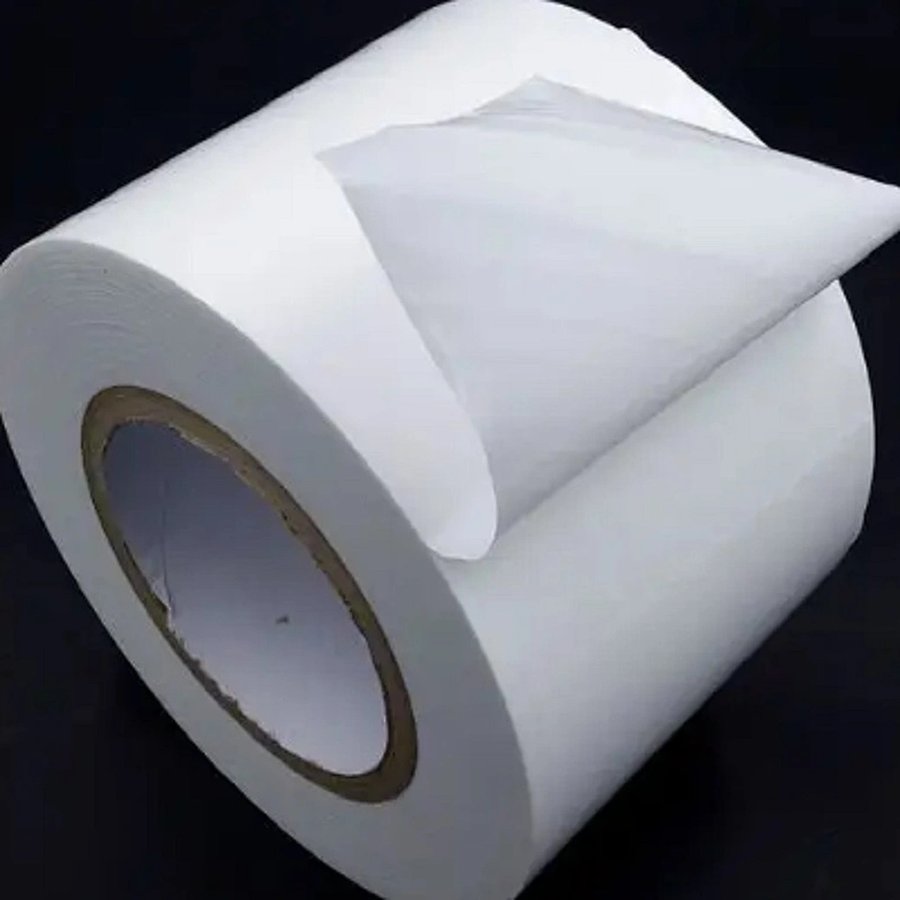
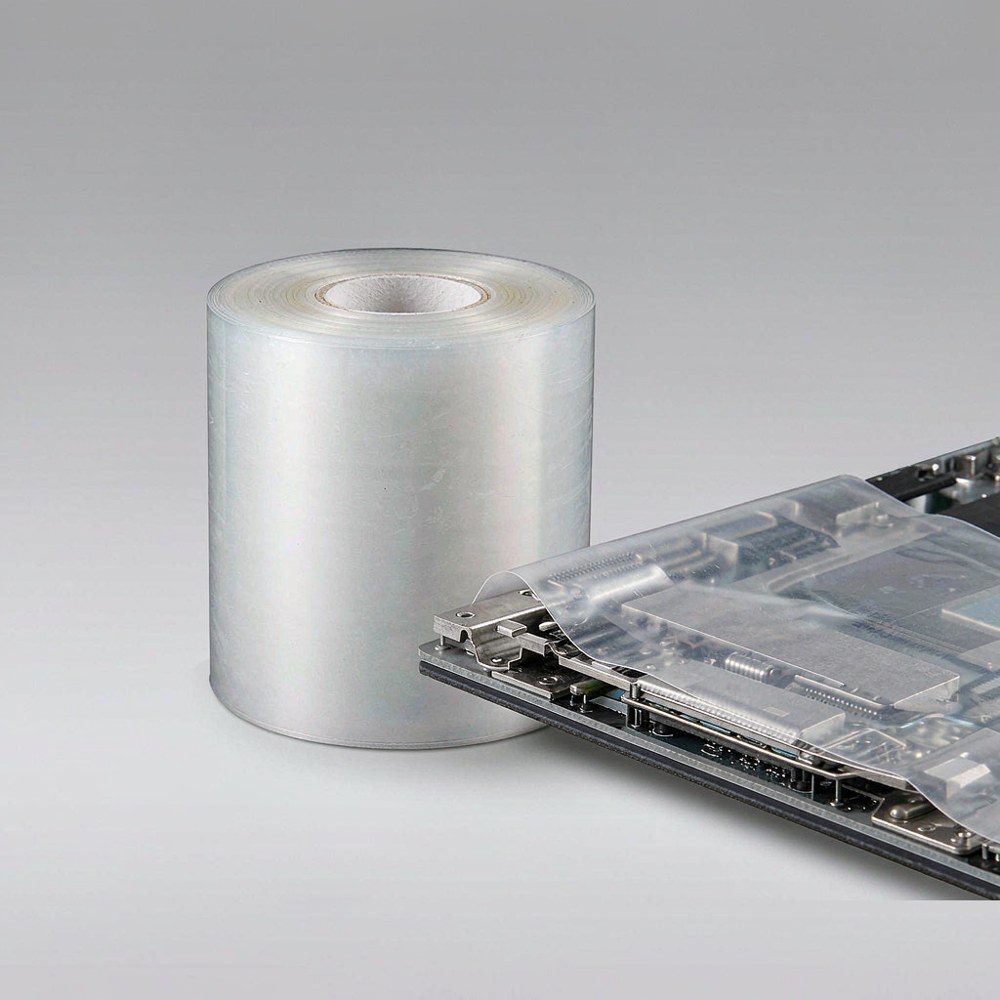
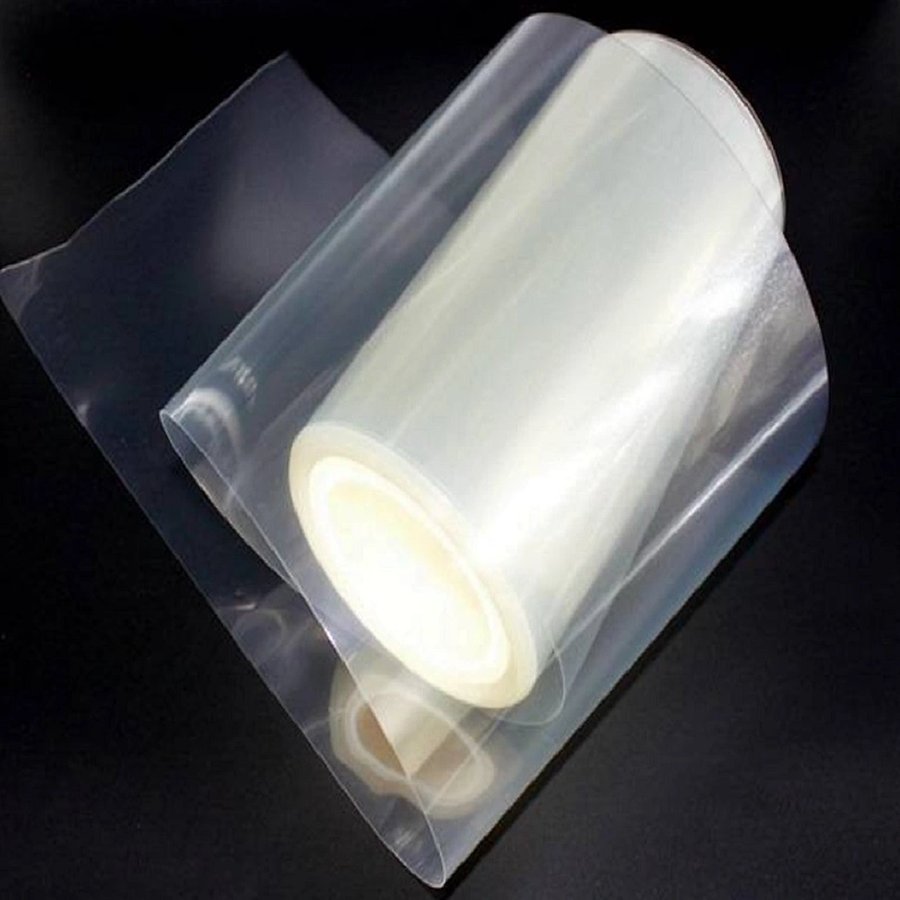
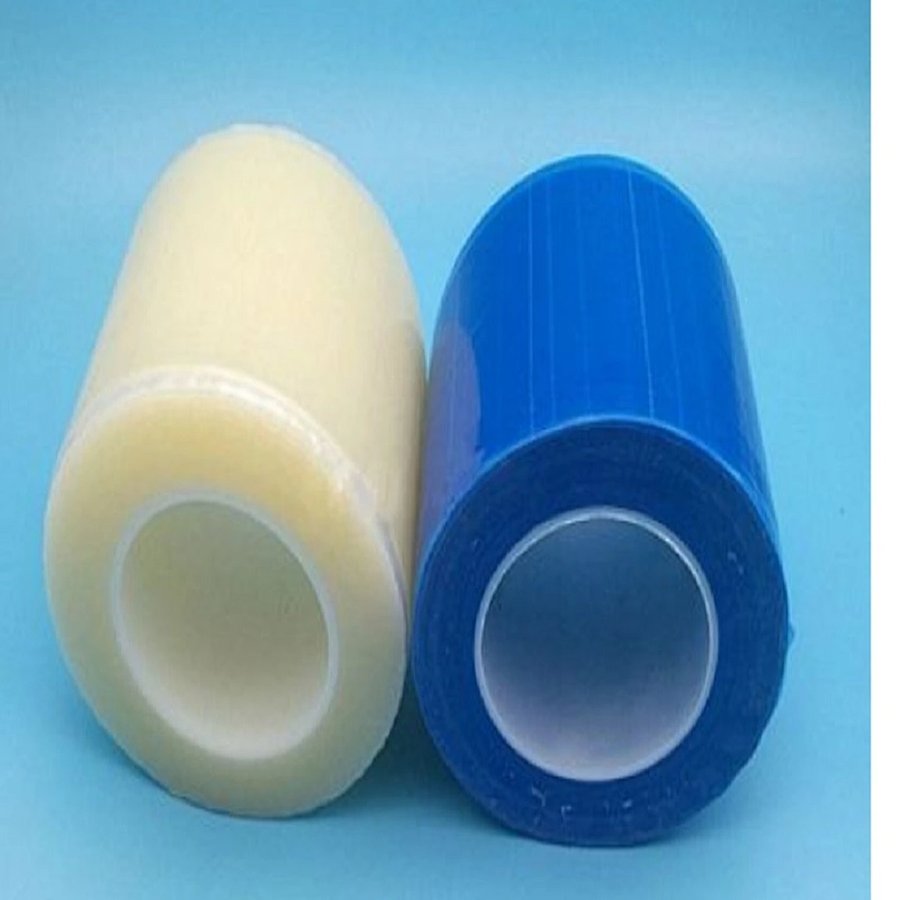 PE and PET film rolls for laser trials
Thickness is counter-intuitive here. Buyers often specify a thicker film thinking it protects better. In laser cutting the opposite holds: a 0.08 millimetre PE film has less thermal mass and shrinks away from the kerf faster than a 0.12 millimetre film, which keeps a larger volume of adhesive in the hot zone for longer. Going thicker typically widens the halo rather than protecting the surface.
The practical parameter window for 1 to 3 millimetre stainless on a fibre laser, with 0.05 to 0.08 millimetre film, looks like this: power 1.5 to 3 kilowatts, cutting speed 4 to 8 metres per minute, nitrogen assist at 10 to 14 bar, focus at or slightly below the surface. The goal is minimum line energy — the highest speed that still produces a clean kerf. Every minute spent at lower speed is extra heat conducted sideways into the film.
There are four process routes and each has a different failure mode. Cutting without film avoids the halo entirely but invites scratches during handling, which on a No.4 or 8K surface is a worse problem. Cutting with film accepts a controlled halo and relies on post-cut cleaning. Cutting first and filming afterwards means handling bare polished sheet, which usually costs more in rework than the film saves. Waterjet cutting has no heat-affected zone at all and is the right answer for thick plate or mirror finish where any discolouration is unacceptable.
Acceptance criteria need to be written down before the job runs, not argued about afterwards. A workable standard for most fabricators: discolouration confined within 1 millimetre of the cut edge, no molten bead or raised residue, and complete removal of charred adhesive after peeling with no ghost mark under raking light. Anything beyond that is a reject, and if the reject rate exceeds 5 percent the parameter window is wrong, not the film.
Post-cut handling decides whether a marginal cut becomes a good part. Peel within 24 hours — adhesive that has been through a thermal cycle continues to cross-link and will leave more residue the longer it stays. Peel at 180 degrees, slowly, at a shallow angle rather than ripping upward. Then wipe the edge with isopropyl alcohol within the hour, before the carbonised ring oxidises into the surface texture. On brushed sheet, wipe along the grain, not across it.
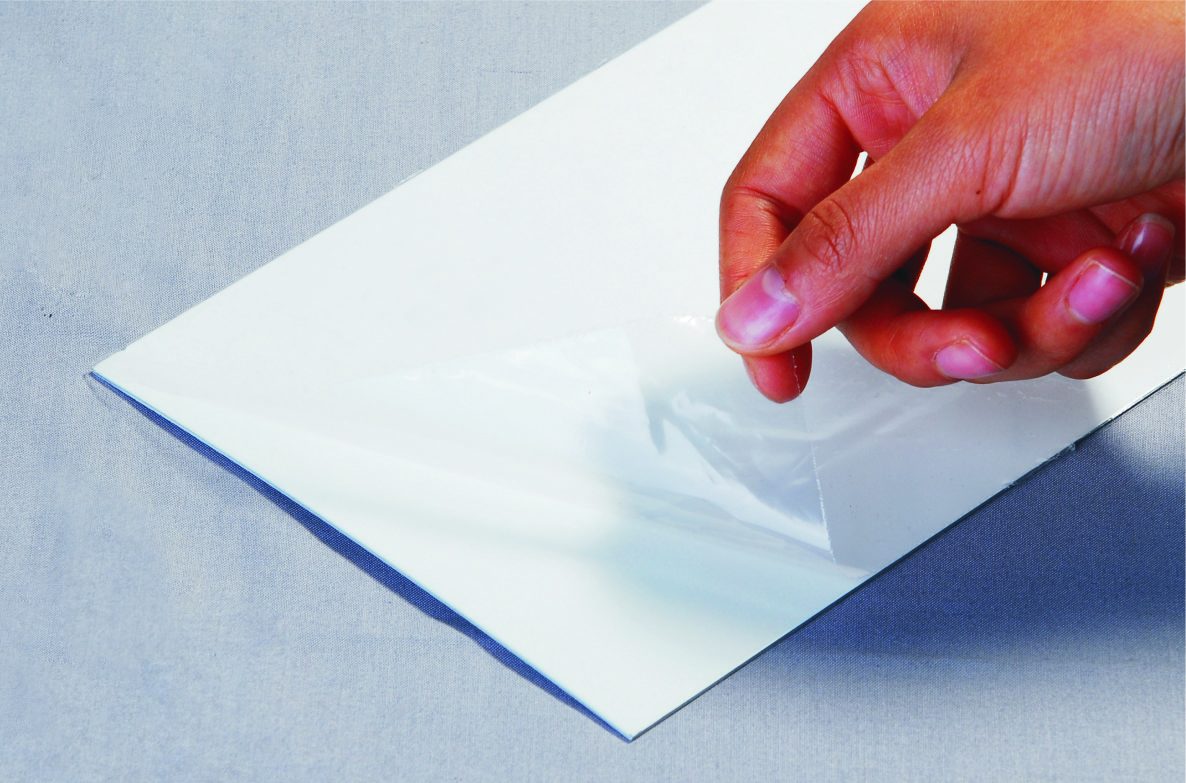 Peeling the film after laser cutting
One more failure worth naming: some shops run PVC film because it is cheap and clings well, then wonder why the cut edge rusts within a week and the extraction duct corrodes. That is hydrogen chloride from the chlorine content, and it is a chemical problem no parameter change will fix. If a supplier cannot tell you the base resin of a protective film, do not put it under a laser.
For mixed production where the same line cuts 2B, No.4 and occasional mirror sheet, a thin blue PE film with controlled low tack handles the handling protection well, but it is the wrong choice for the cut itself — use it on parts that are cut before filming, or switch to PET for the laser operation. The full range is listed under GDY-031 PE protective film; if you are qualifying a laser process, request a free sample set in both PE and PET and run the same job on both before you commit to a specification.