Summer Residue on Stainless Steel: Why 35 °C Changes Everything
Standard peel data is measured at 23 °C. Your warehouse in summer hits 35 °C. Why adhesion climbs during hot storage, what residue really is, and four controls that keep it off your line.
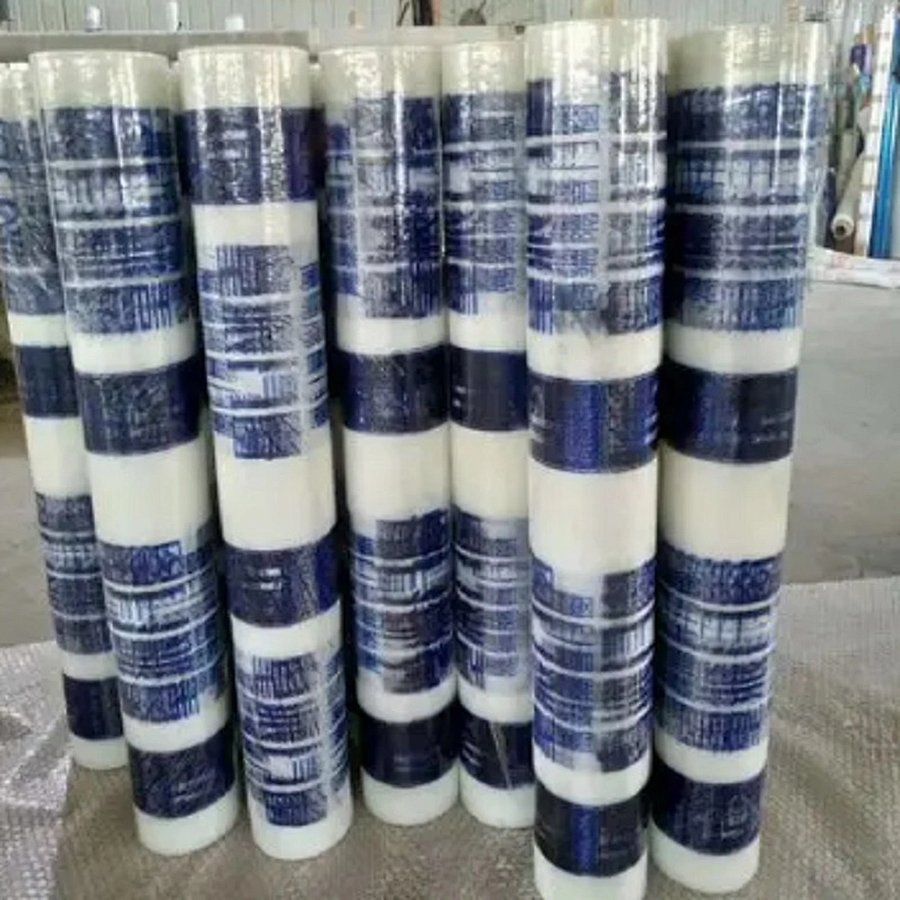
A stainless steel sheet laminated in March peels clean in April. The same film on the same sheet in July, pulled off at 35 °C in a warehouse without air conditioning, leaves a sticky haze that a dry cloth no longer removes. Production teams across Southeast Asia see this every year and usually blame the film quality. In most cases the film is identical; the temperature is not.
Protective film adhesives are viscoelastic. Their peel force depends on how deeply the adhesive flows into the micro-roughness of the surface during dwell time. Heat lowers the viscosity of the adhesive, so a film that sits lightly on a brushed finish at 23 °C creeps into every grinding line as the days get hotter. Time and temperature work together: each week of storage at elevated temperature pushes the adhesive further into the surface, and the force needed to remove it climbs with it.
This is why datasheet numbers mislead buyers in hot climates. Standard peel tests such as GB/T 2792 and ASTM D3330 are run after conditioning at 23 °C ± 2 °C, and ASTM D3330 additionally specifies 50 % ± 5 % relative humidity. A typical medium-tack PE film measures roughly 100 to 200 g/in under those laboratory conditions after a 24 hour dwell. The numbers are real, but they describe a climate-controlled laboratory, not a 35 °C workshop in May.
What happens above 35 °C is predictable in direction even though the exact value depends on the adhesive system. As a typical range, the same medium-tack construction that peels at 100 to 200 g/in at 23 °C can measure a multiple of that after several weeks of storage at 35 to 40 °C, and the removal character changes from a clean, low-noise peel to a jelly-like peel that stretches before it lets go. Actual values must be verified on the specific film and surface; the direction, however, is consistent across suppliers.
Residue is what remains when the adhesive does not release together with the backing. At high temperature the load splits: part of the adhesive leaves with the film, part stays in the pores of the finish as a translucent layer that traps dust and fingerprints. The haze is far more visible on mirror and bright annealed finishes than on a No. 4 brushed surface. Removing it means solvent wiping, which adds labor hours and, on surfaces with hygiene requirements, raises questions the plant would rather avoid.
Tack grades are not interchangeable across seasons. A low-tack film that looked weak in a March trial may be the correct choice for a summer shipment, because it keeps its removal window open even as the adhesive softens. A medium-tack film is reasonable when the sheet will be processed within two to four weeks. High-tack constructions belong on rough or heavy surfaces that move fast through production, not on stainless steel that waits in a hot yard for months.
Four controls keep summer residue off the line. First, measure the surface temperature of laminated sheets around 14:00 rather than the air temperature; metal exposed to sun runs well above 35 °C even when the shed feels moderate. Second, mark the lamination date on the film edge and remove the film within 30 days during the hot season. Third, store sheets away from sun-facing walls and keep the warehouse below 40 °C with ventilation. Fourth, never leave film on surfaces that will be visually inspected after storage.
When sourcing film for hot-season production, ask the supplier for peel data measured after elevated-temperature storage, not only for the standard 23 °C datasheet value. A factory that runs its own coating lines can adjust tack by formulation and offer a summer grade instead of a one-size answer. Our PE blue protective film GDY-031 is coated in-house, so tack can be tuned to the storage temperature your products actually face between lamination and removal.
The fastest way to find out whether your current film survives summer is a controlled test on your own line. Request a free sample, laminate six sheets, keep three at room temperature and three near the hottest point of the warehouse for one week, then peel at both conditions and compare the removal. Send us the panel dimensions, the surface finish and the highest expected storage temperature, and we will recommend the tack grade and the removal window that fit your season.