No.4 vs 8K vs 2B Stainless: Which Film Won't Dull the Surface
Roughness decides how much adhesive touches the metal. Why the same blue PE film behaves differently on 2B, No.4 and 8K, and how to pick the right adhesion tier.
A fabricator in Vietnam rejected three coils of 8K mirror sheet last month. The film peeled off clean — no adhesive transfer, no bubbles, no scratches. But under a 45-degree inspection light the surface showed a faint milky haze in the exact shape of the film. The customer called it a film shadow. Nothing was wrong with the adhesive chemistry. The film was simply too matte for a surface that reflects most of the light hitting it.
Stainless surface finish is not cosmetic. 2B, No.4 and 8K differ in roughness by more than an order of magnitude, and roughness controls how much of the adhesive layer actually touches metal. 2B — cold rolled, annealed, pickled and skin-passed — typically sits around Ra 0.1 to 0.3 micrometres. No.4 brushed sheet measures roughly Ra 0.5 to 1.5 micrometres with a clear directional grain. 8K mirror is polished below Ra 0.05 micrometres, which is why it reflects an image instead of scattering light.
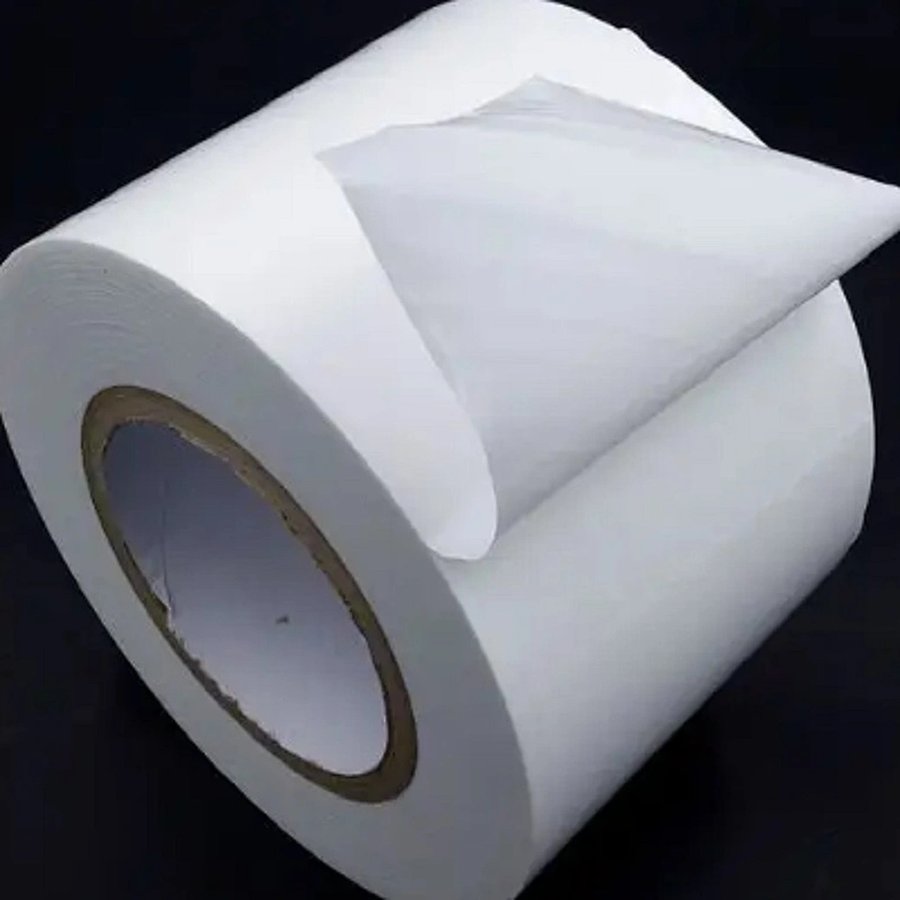
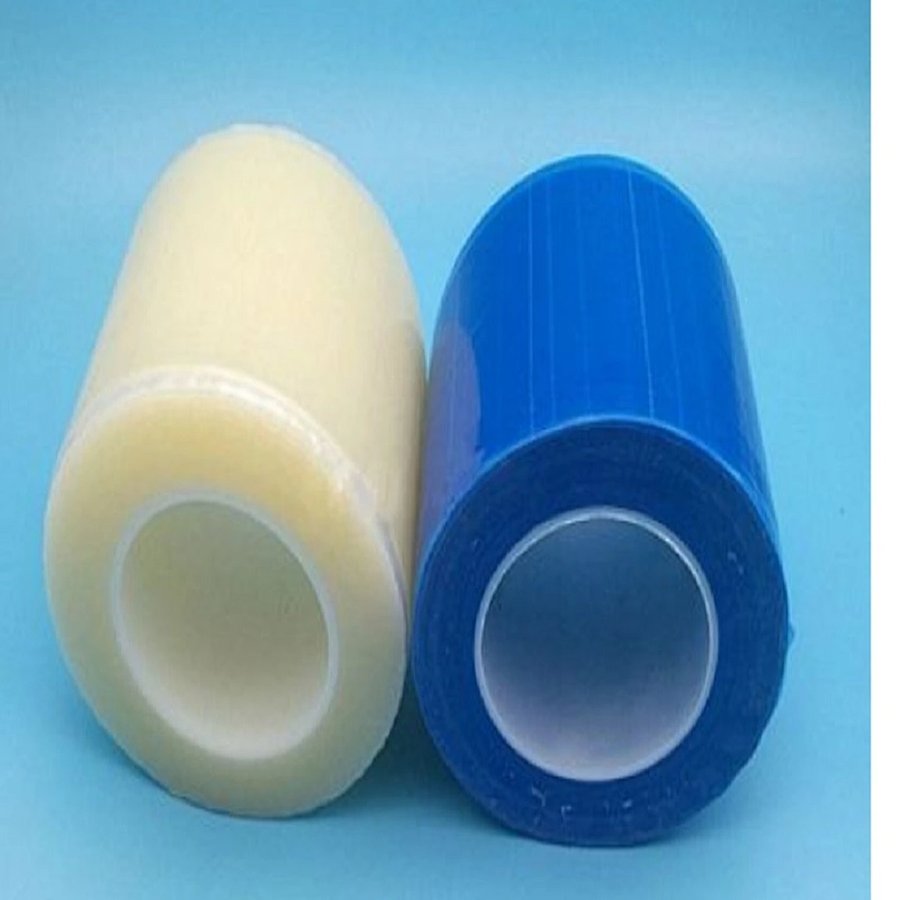 Blue and clear PE film rolls straight from our stock
Contact area is the variable most buyers never calculate. On a brushed surface the film touches only the peaks of the grain and bridges the valleys. On mirror sheet it touches almost the entire surface. Same adhesive, same coat weight, yet peel force measured to GB/T 2792 or ASTM D3330 method A can differ by 30 to 50 percent between the two. A film that behaves perfectly on 2B will feel aggressively tacky on 8K — and aggressive tack is the first step toward residue.
There are two separate mechanisms behind a dulled surface, and they need different fixes. The first is adhesive micro-flow: under coil tension and warehouse heat, adhesive creeps into the grain valleys of brushed sheet, then anchors there. When you peel, fragments stay in the valleys and scatter light. The second is film haze. A PE film with high internal haze acts like a diffuser; leave it on a mirror panel for eight weeks in a warm warehouse and the surface reads dull even though nothing has transferred.
That distinction matters because the two failures look identical in a rejection photo. If the haze disappears after wiping with isopropyl alcohol, it is surface contamination from the film plasticiser or from condensation. If it survives wiping and shows up as a faint pattern, adhesive has migrated into the grain. Only the second case is a real adhesion mismatch.
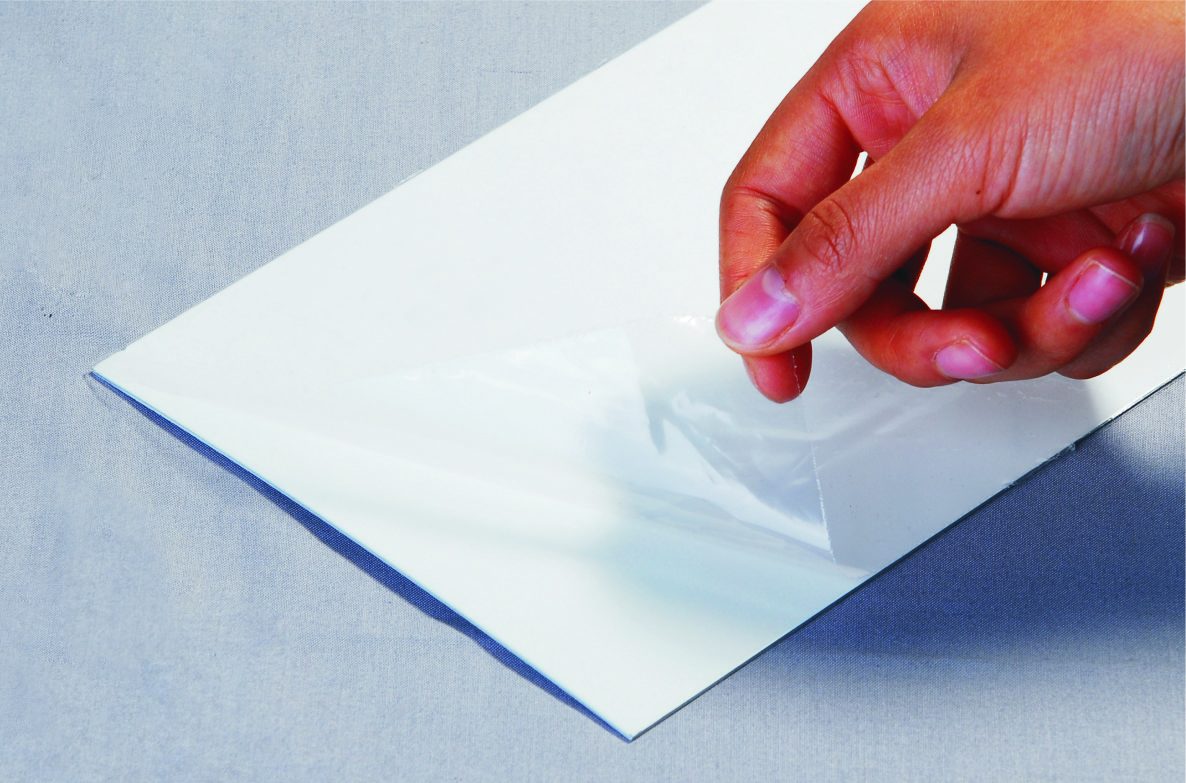
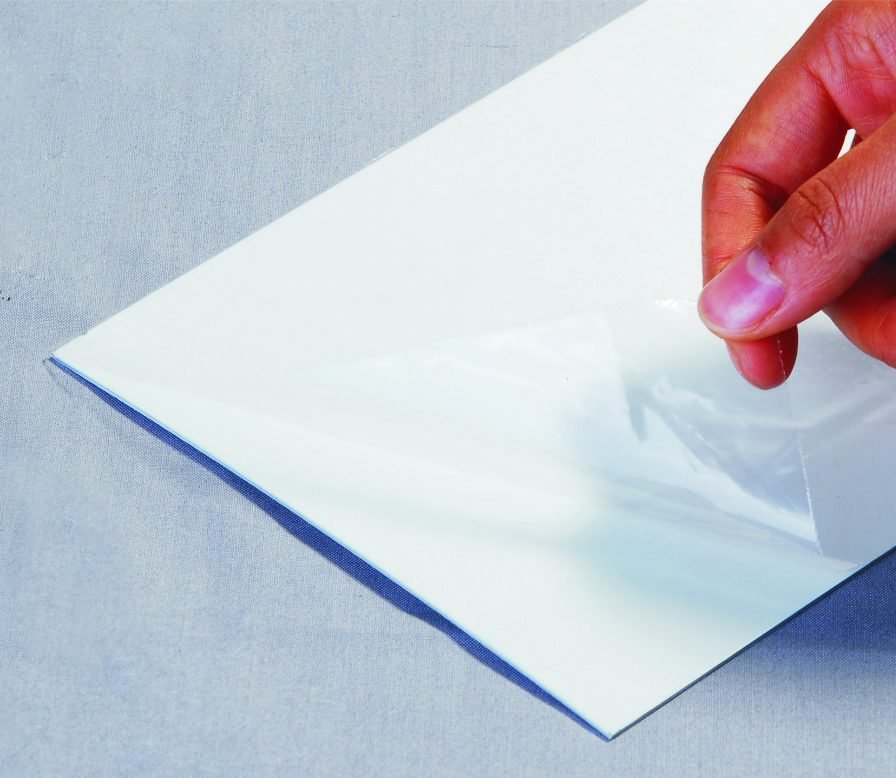
Peeling test after laminationPicking the right film comes down to three questions, in this order. First, what is the surface roughness — this sets the adhesion tier. Second, what happens to the sheet after filming: laser cutting, bending, deep drawing, or just storage and shipping — this sets the temperature and tensile requirements. Third, how long is the sheet in the film: two weeks domestically is a different problem from twelve weeks in a sea container crossing the equator.
For roughness matching, a practical starting point is three tiers. Mirror and 8K surfaces normally call for a low-tack tier, typically 5 to 15 grams per 25 millimetres measured by GB/T 2792 at 180 degrees and 300 millimetres per minute. 2B and BA surfaces tolerate a medium tier, roughly 15 to 30 grams per 25 millimetres. Brushed No.4 usually wants the medium-to-high tier because the peaks carry the load, but the adhesive must be soft enough to wet the grain without flowing into it. Treat these as starting points, not specifications — always confirm on your own sheet.
Verification is cheap and takes four tests. Peel adhesion to GB/T 2792 at 180 degrees gives you the baseline number. A residue test holds the filmed panel at 65 degrees Celsius for 24 hours, cools it, then peels and inspects under raking light. A humidity test runs 40 degrees Celsius at 90 percent relative humidity for 72 hours, which is the closest bench proxy for a sea container. A UV exposure test of 100 hours catches the films that go brittle before they reach the customer.
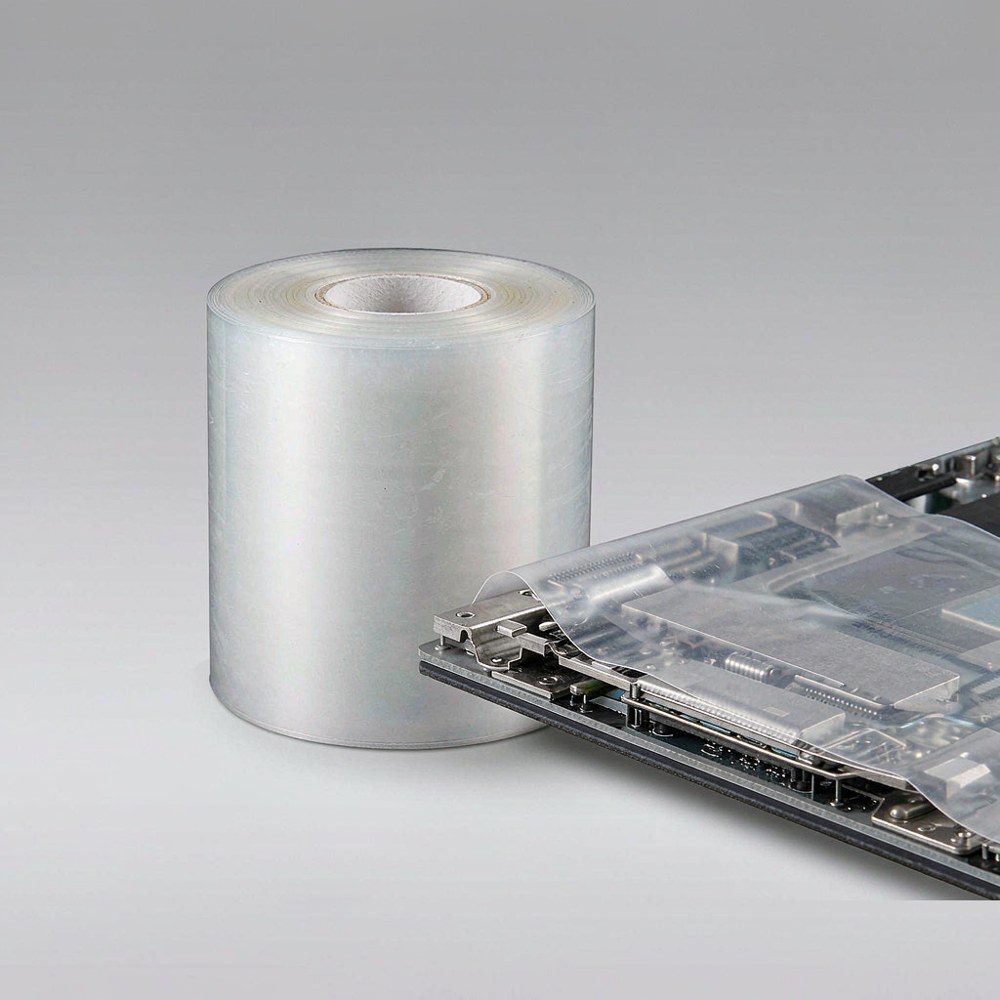
 High-clarity PE roll used for haze comparison
Application discipline decides the rest. Apply below 40 degrees Celsius — above that the adhesive is already mobile and you trap it in the wrong place. Keep web tension low; a film stretched on application will retract and lift at the edges within days, and edge lift is often misdiagnosed as weak adhesive. On brushed sheet, apply along the grain direction so the squeegee roller pushes adhesive down into valleys instead of dragging it sideways. On mirror, use a hard rubber roller and two passes, because a single pass leaves micro-bubbles that read as haze.
One more correction worth making: edge lift is rarely a sign that the film is too thin. It is almost always tension, surface temperature, or a contaminated edge from shear cutting. Thickening the film to fix lift usually makes the residue problem worse, because a heavier film applies more peel force at the same adhesion level. If you are fighting lift on 8K, check tension and edge cleanliness before you ask for a thicker product.
Blue PE film with a controlled low-tack adhesive is the practical answer for mixed production lines, because the colour makes missed patches obvious during inspection and the low tack keeps mirror surfaces clean. The full specification for GDY-031 blue PE protective film covers width, thickness and adhesion tiers. If you are evaluating three finishes at once, request a free sample set with 2B, No.4 and 8K panels from your own stock and we will match the adhesion tier to each one.
Concretely: cut three 200 by 300 millimetre panels from the same coil you are currently running, label the finish and the mill direction, and send them with your current film sample and the rejection photo if you have one. We return a written recommendation with the adhesion tier, thickness and application tension for each finish, plus peel data measured on your own panels rather than on our reference steel.