Protective Film in Vietnam: Humidity, Monsoon Storage and What Changes
Southern Vietnam sits at 75-85% RH year-round and 90%+ in the wet season. What condensation under the film does to adhesion over months, and the storage rules that prevent it.
The complaint usually arrives in July or August. A warehouse in Hai Phong or Binh Duong opens a container of coated steel or aluminium profiles filmed three months earlier in China, and between the film and the metal there is a fine layer of condensation. The sheets look fine. Two weeks later, when the fabricator starts peeling, patches of adhesive stay behind exactly where the water had sat.
This is not a wet-adhesion defect in the ordinary sense, and replacing the film with a different brand rarely fixes it. The problem is that buyers evaluate protective film under laboratory conditions of 23 degrees Celsius and 50 percent relative humidity, then store it for months in a climate that never sees those numbers. Around Ho Chi Minh City the annual average sits at 75 to 85 percent RH, and during the May-to-October wet season it spends long stretches above 90 percent. In the northern industrial provinces around Hai Phong and Bac Ninh, the summer monsoon brings the same pattern in concentrated form.
The mechanism is condensation, not absorption. PE film itself takes up almost no water — well under 0.1 percent — so the carrier is never the issue. What matters is the interface. When a roll or a filmed panel cools below the dew point overnight, water condenses in the boundary layer between adhesive and metal. The water does not wash the glue away; it slowly plasticises the adhesive where contact is poor and interferes with wetting where contact was marginal. Over weeks, peel strength drifts — usually upward at the edges where the film lifts and moisture gets in, and unevenly where the condensation sat.
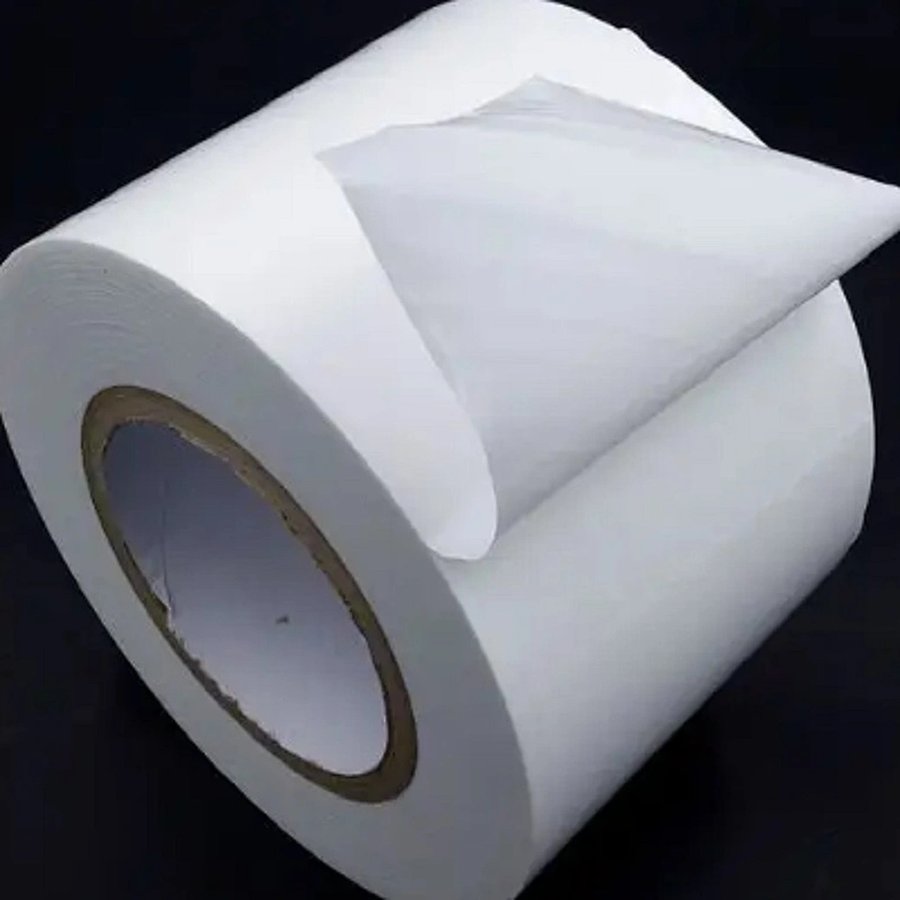
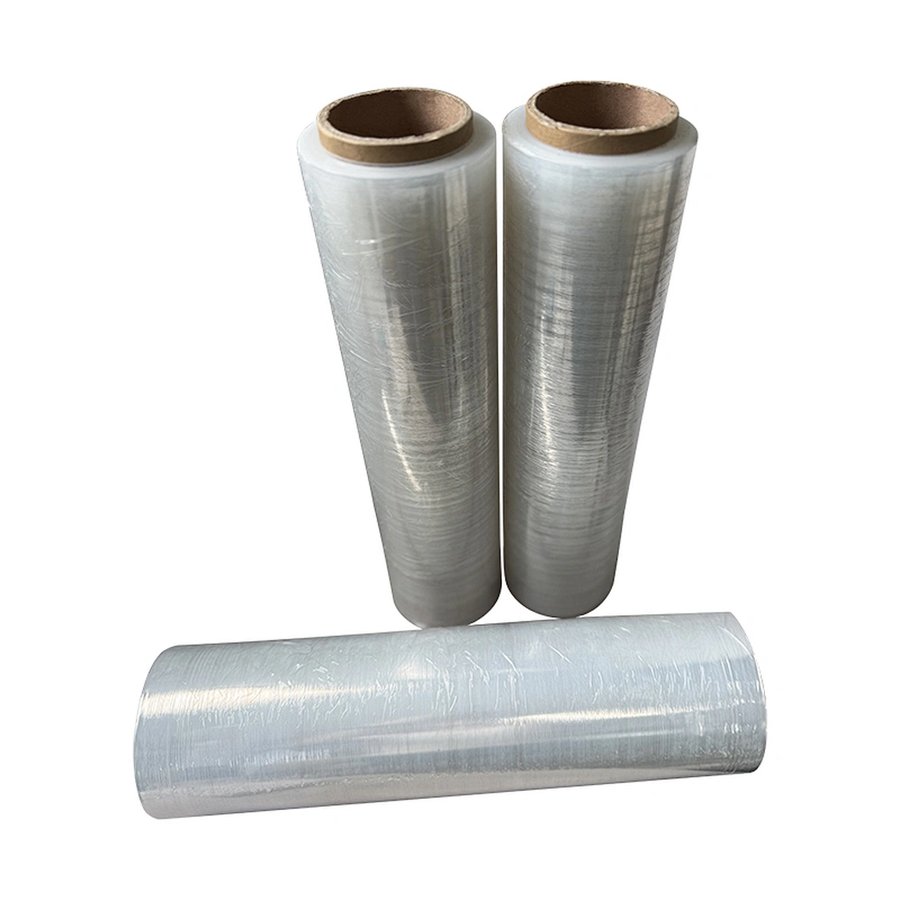 Filmed rolls wrapped on pallets for storage
The tell-tale signature is worth knowing before you blame the supplier. Condensation damage follows a pattern: foggy water marks under the film rather than uniform haze, edge lift that is worse on the side of the stack facing the floor or the wall, and panels lower in a rack damaged more than panels above, because cold air pools at the bottom. If instead every sheet in every position shows the same residue, the adhesive itself is the suspect and the batch should be tested.
Two standard tests separate a film problem from a storage problem. The first is a 180-degree peel test to GB/T 2792 on material stored in the actual warehouse, compared against the same batch stored in a dry room — the difference is your storage penalty, and in monsoon warehouses it can move peel strength by a wide margin. The second is the damp-heat exposure used across the industry to simulate sea freight and monsoon storage: 40 degrees Celsius and 90 percent RH for 72 hours, then peel and inspect for residue. A film that leaves clean adhesive after that cycle, on your substrate, will hold up in a disciplined Vietnamese warehouse.
Storage discipline matters as much as film choice, and it is cheap. Pallets at least 10 to 15 centimetres off the floor — concrete slabs in monsoon season are a permanent source of moisture from below. Packs away from exterior walls, where night-time radiative cooling drops the surface below dew point. Original stretch wrapping left on until the moment of use, because it is a vapour barrier that slows the day-night breathing cycle. First-in-first-out rotation, because PE protective film has a practical shelf life of roughly 6 to 12 months depending on adhesive system, and long-stocked rolls age exactly where you cannot see it — in the contact layer.
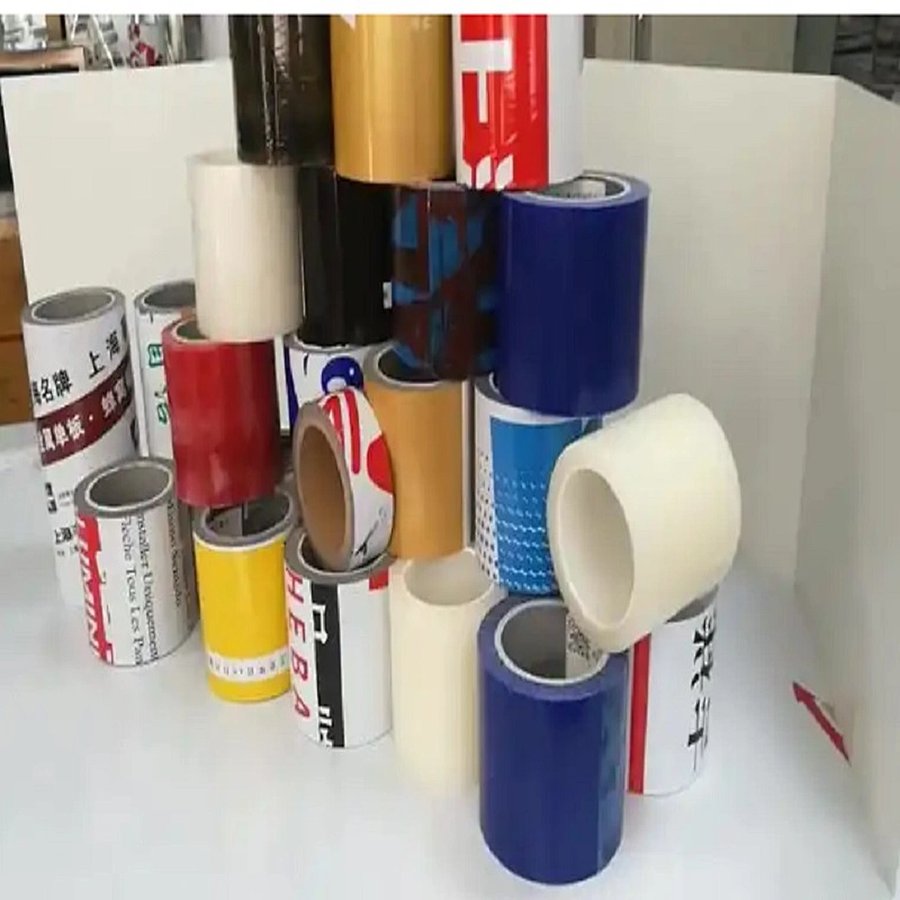
For construction materials the stakes are highest, because site storage is the least controlled. Aluminium profiles and curtain-wall panels for projects around Hanoi or Da Nang can sit filmed for six months or more, through at least one wet season, before glazing. This is the case for a construction-grade film specified at the upper end of the peel range, and verified rather than assumed: our PE construction film runs 30 to 300 g/25mm peel strength and 150 to 2100mm width, and the right setting for monsoon-site aluminium is near the top of that range, confirmed by a peel test after damp-heat conditioning rather than by the datasheet alone. See the film on the product page.
For long ocean legs into Hai Phong or Cat Lai, film choice and packing interact. A film qualified for long-distance shipping keeps its peel window stable across the transit and unloading period, and stretch-wrapped pallets reduce the condensation cycling that does the damage. The blue PE film used on stainless and general metal surfaces is the usual reference here — the bright colour also makes condensation staining and edge lift obvious during incoming inspection, so a problem batch gets caught at the dock instead of at the press. Details and specs are on the product page.
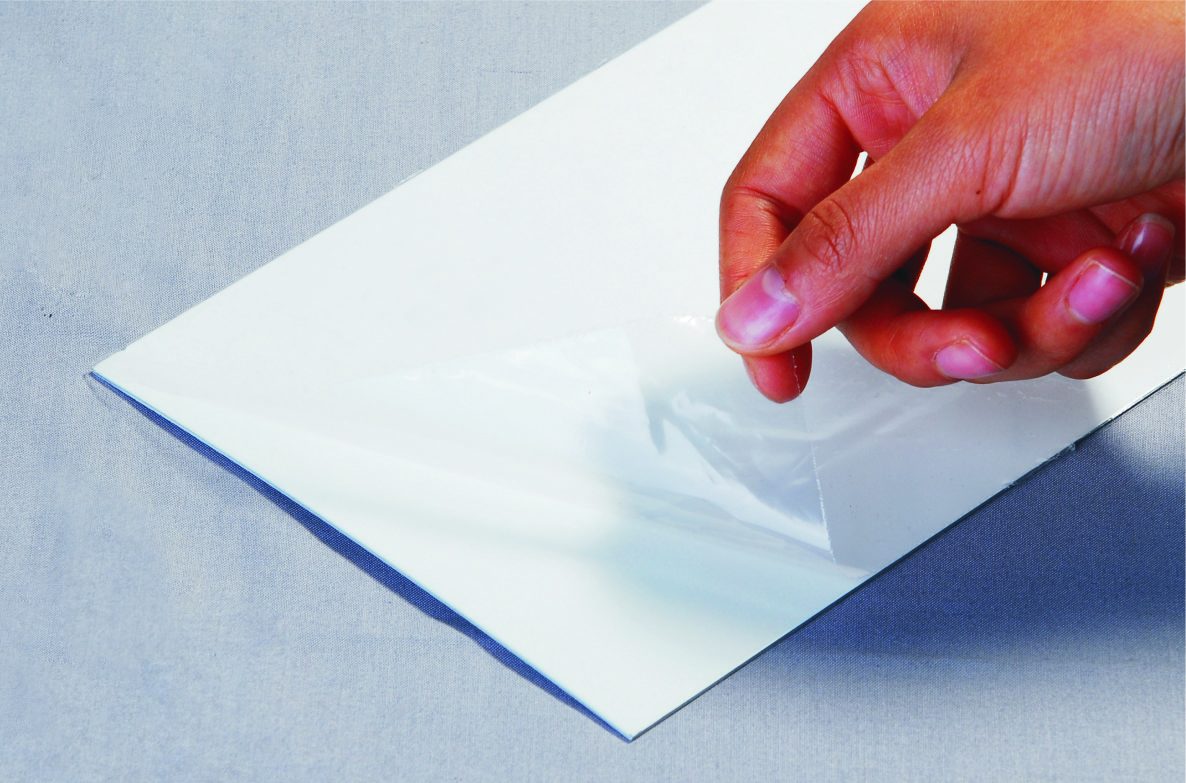 Peeling inspection after storage
Put it into an incoming-inspection routine and the whole risk collapses into a checklist. On arrival: unwrap one roll, look for fog marks and edge lift, and put it back only if it is clean. Every quarter, or after any batch stored through a wet season: peel-test to GB/T 2792 against a dry-room reference, and run the 72-hour 40°C/90%RH cycle on your actual substrate before releasing the batch to production. Any supplier worth keeping will send you free samples to run exactly that trial with your own panels in your own warehouse — one wet season of data beats any datasheet.