Steel Distributors in Vietnam: Sourcing Film in Small, Fast Lots
A distributor cannot stock every width and still turn stock in 48 hours. How to collapse the range to 3-5 SKUs, keep batches consistent, and mix containers without tying up cash.
A steel distributor in Binh Duong keeps six film specifications on the floor and still runs out of one every week. His customers are sheet-metal shops that order in the morning and want delivery the same afternoon, and the film they ask for is never the roll that happens to be in stock. So he does what every distributor in this position does: he carries more SKUs, ties up more cash, and still disappoints somebody on Friday.
The mistake is treating film as a product to be stocked rather than a specification to be managed. A distributor's economics are not driven by unit price. They are driven by two numbers multiplying each other: how much of the customer base one SKU covers, and how many times a year that SKU turns over. A cheap roll that covers three customers and sits for nine months is more expensive than a mid-priced roll that covers thirty customers and turns every six weeks.
So the first move is to measure, not to buy. Pull four weeks of orders and list every film width, thickness and adhesion level that actually shipped. In most Vietnamese service centres the demand collapses into a very small set: panel widths around 1250 and 1500 millimetres cover the majority of sheet, and thickness between 0.05 and 0.08 millimetres handles most handling and light forming. Everything outside that cluster is special order, and should be priced and quoted as special order rather than quietly stocked.
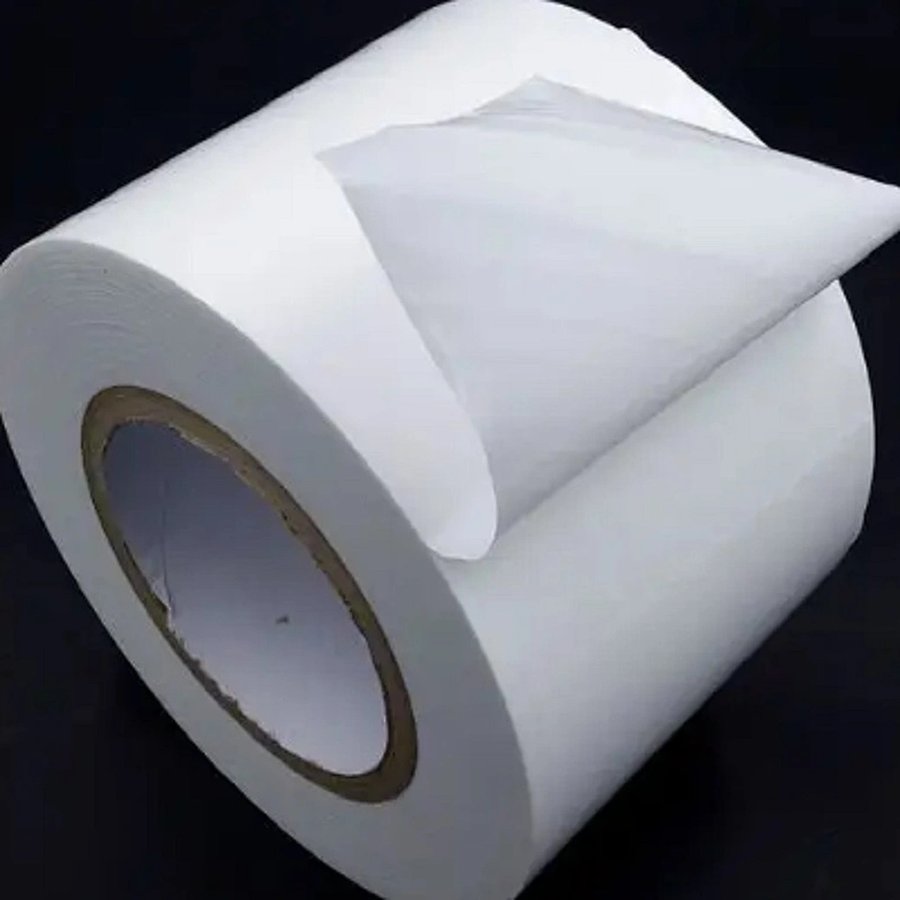
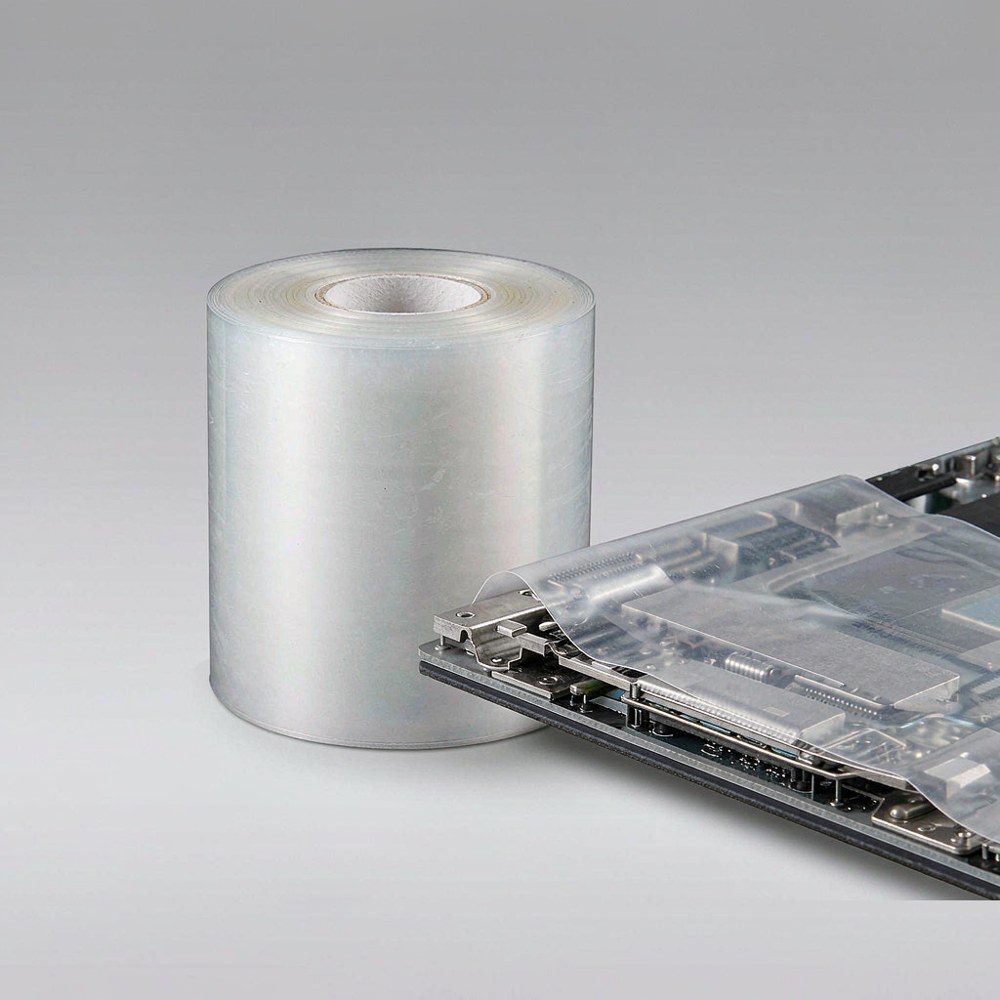
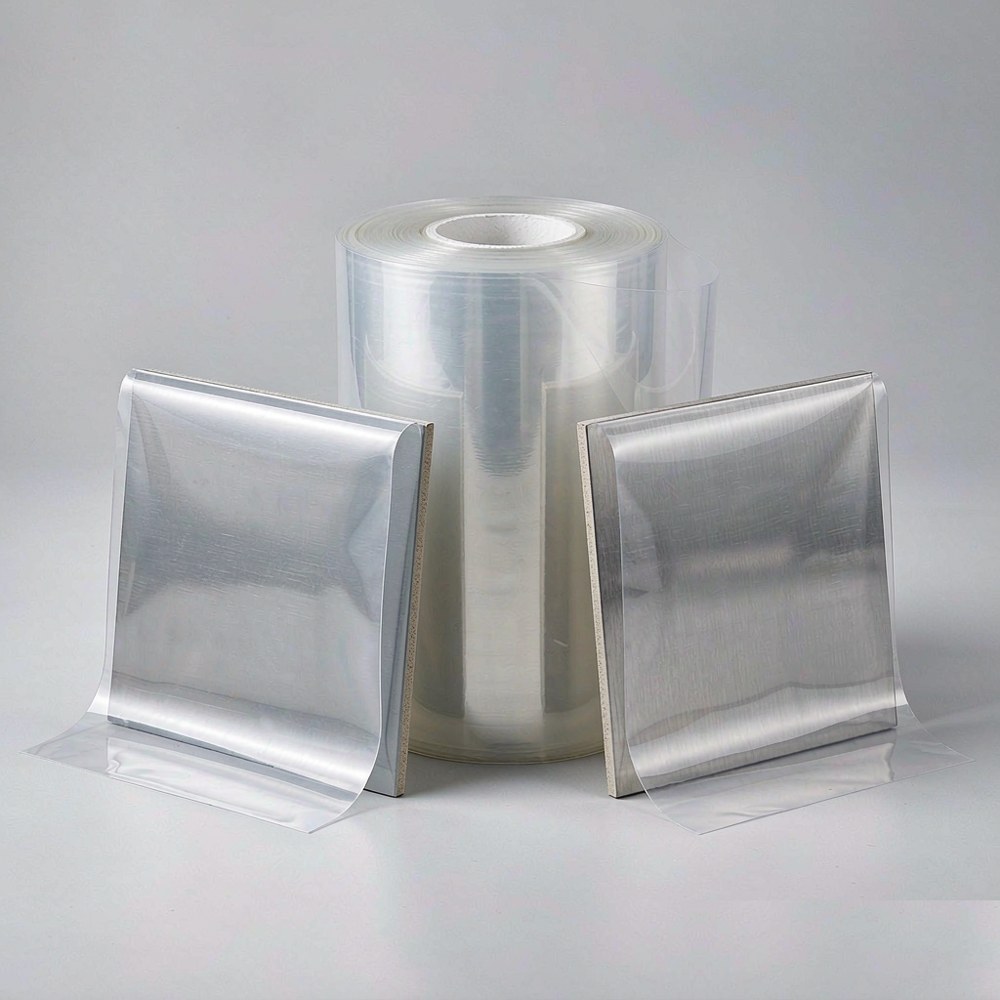
Clear film rolls and filmed metal panels from stockCollapsing to three to five SKUs is the single highest-leverage decision a distributor makes. The usual set looks like this: a general-purpose 0.05-0.06 millimetre film at medium adhesion for flat sheet and delivery protection, a 0.07-0.08 millimetre film for parts that will be bent or handled repeatedly, a construction-grade film with higher peel for profiles and curtain wall that sit on site for months, and one wide roll that can be slit down locally for the odd order. That is a stock that can answer most of the phone calls without a special order.
The second move is harder and worth more: lock the adhesive system, not just the dimensions. Distributors get blamed for problems that come from batch-to-batch drift, because their customer runs the same press settings and suddenly the film peels differently. A supplier who will hold one adhesive formulation and confirm it with a peel test to GB/T 2792 on every batch is worth more than one who is five percent cheaper. Ask for the number in writing, per batch, and keep a reference roll from each lot so a complaint can be settled with data instead of argument.
Mixing containers is how a distributor carries range without carrying inventory. A single container can hold several widths and thicknesses, split across the SKUs that turn fastest, so the cash sits in the combinations customers actually order rather than in a full pallet of one width. The constraint is not the container, it is the supplier's willingness to schedule mixed production runs — and that is exactly the question to ask before talking about price. Our PE construction film comes in 150 to 2100 millimetre widths with 30 to 300 g/25mm peel, which is the range a mixed container is built from.
Speed has a physical limit that no supplier can remove. Ocean freight from South China to Hai Phong or Cat Lai is typically one to two weeks door to door including clearance, so a distributor promising 48-hour delivery is really promising to hold stock, not to ship fast. The honest model is a small buffer of the three fastest-moving SKUs, replenished on a fixed cycle, with everything else quoted at sea-freight lead time. Once a customer understands which bucket their order falls into, the Friday disappointments stop.
For appliance and coated-steel customers there is an extra requirement that catches distributors out: colour and surface. PCM and VCM coated sheet is sold on appearance, and a film that leaves a tint, a haze or an adhesive shadow shows up after painting or after the customer unwraps in front of their own client. A film specified for coated steel and appliance processing, with low residue after peeling, removes a whole category of returns. The appliance film range is here, and it is the one to sample before quoting a coated-steel account.
 Peel inspection on incoming rolls
Incoming inspection is where a distributor protects the whole business, because a bad lot does not fail at the warehouse, it fails at the customer's press three weeks later. Two checks are enough for a stock operation: peel test one roll per lot to GB/T 2792 against your reference, and visually inspect for edge damage, telescoping and wrap integrity. Rotate stock first-in-first-out, keep rolls off the concrete floor, and treat 6 to 12 months as the practical shelf life — adhesive systems age quietly in the contact layer long before the roll looks old.
None of this requires a bigger warehouse. It requires a narrower range, a supplier who will commit to a formulation in writing, and a replenishment cycle that matches the sea freight rather than fighting it. If you are resetting a film range for the Vietnamese market, start with free samples of the three SKUs you intend to standardise on, run them on your customers' actual panels, and let four weeks of orders — not a price list — decide what goes on the floor.